
Pain that lingers, spreads, or starts limiting what you can do is not “just part of getting older.” It’s not something you’re supposed to simply tolerate.
Chronic pain is generally defined as pain that lasts weeks to months and does not improve the way it should. It may have started with an injury, surgery, or no clear cause at all. The key difference is this: it doesn’t go away.
A pain management specialist doesn’t just hand out prescriptions. The real goal is to identify the source of your pain and treat it directly. That may involve targeted procedures, imaging-guided treatments, or structured plans designed to improve function.
If you’re dealing with ongoing pain in New Jersey, Dr. Shane Huch, a pain management specialist in New Jersey, focuses on diagnosing and treating the root cause of chronic and nerve-related pain. You can learn more about his approach on our homepage.
If you recognize yourself in the signs below, it may be time to get evaluated.
1. Your Pain Has Lasted More Than a Few Weeks
Not all pain is chronic. But pain that lingers past the normal healing window deserves attention.
Pain Isn’t Improving After an Injury
Most strains and minor injuries gradually improve within a few weeks. If you’re still in the same level of pain a month later, something deeper may be going on.
It’s Lasting Longer Than It Should
There’s a difference between soreness and persistent pain. Soreness fades. Chronic pain hangs around, fluctuates, and often returns.
When pain outlives its expected timeline, it’s time to look beyond “wait it out.”
2. You’ve Tried Rest, Ice, or Medication — and It’s Not Working
Conservative treatment is usually the first step. But if it fails, you shouldn’t stay stuck.
Rest and Ice Haven’t Helped
If you’ve modified activity, iced the area, maybe even done some physical therapy, and nothing has changed, the underlying issue may need a more targeted approach.
Over-the-Counter Medications Are Losing Effectiveness
If you find yourself taking pain relievers daily just to function, that’s a red flag. Especially if they work less and less over time.
Masking Pain Isn’t Treatment
Medication can reduce symptoms temporarily. But it doesn’t fix nerve irritation, inflammation inside a joint, or spinal compression.
If the pain keeps coming back, the source needs to be addressed.
3. Your Pain Is Affecting Daily Activities
Pain becomes a real problem when it starts shrinking your life.
Trouble Working
If you can’t sit, stand, or concentrate because of pain, it’s impacting more than your body. It’s affecting your livelihood.
Avoiding Hobbies
Skipping the gym. Canceling plans. Stopping activities you used to enjoy. That’s not minor discomfort — that’s functional loss.
Difficulty With Basic Tasks
If bending to tie your shoes, walking through the grocery store, or climbing stairs feels like a challenge, your pain is no longer “manageable.”
4. You’re Losing Mobility or Flexibility
Pain often leads to stiffness. But persistent stiffness can signal structural or nerve involvement.
Reduced Range of Motion
If you can’t turn your neck fully, bend forward comfortably, or rotate your torso without pain, something deeper may be restricting movement.
Stiffness That Doesn’t Improve
Morning stiffness that lasts hours. Back tightness that never fully loosens. That’s not typical soreness.
Weakness Linked to Nerve Involvement
If you notice weakness in your arms or legs, especially paired with tingling or numbness, nerve irritation could be involved. That requires evaluation sooner rather than later.
5. Your Pain Is Interfering With Sleep
Sleep disruption is one of the clearest signs that pain is serious.
Pain Wakes You at Night
If you’re waking up because of discomfort, that’s not minor inflammation. Night pain is a common sign that something needs medical attention.
Difficulty Getting Comfortable
Constant repositioning. Sleeping with multiple pillows. Avoiding certain sides. These are workarounds, not solutions.
Poor Sleep Makes Pain Worse
Lack of sleep increases inflammation and lowers pain tolerance. That creates a cycle: pain disrupts sleep, poor sleep amplifies pain.
Breaking that cycle often requires more than rest alone.
6. You Have Numbness, Tingling, or Burning Sensations
Pain is one thing. Nerve symptoms are another.
Signs of Nerve Involvement
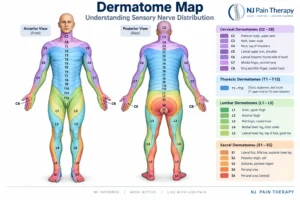
If your pain comes with numbness, tingling, pins-and-needles, or a burning sensation, that often points to nerve irritation or compression. This isn’t typical muscle soreness.
Nerve pain tends to feel sharp, electric, or radiating — not dull and achy.
Radiating Pain Down Arms or Legs
Pain that travels from your neck into your arm, or from your back down your leg, is a classic nerve pattern. Sciatica and cervical radiculopathy are common examples.
When pain spreads along a path, rather than staying in one spot, it’s a sign that the nervous system may be involved.
Why Nerve Symptoms Shouldn’t Be Ignored
Left untreated, nerve irritation can worsen. In some cases, prolonged compression can lead to weakness or long-term changes.
If you’re experiencing nerve symptoms, it’s worth getting evaluated before the problem progresses.
7. The Pain Keeps Coming Back
Maybe it improves for a while. Then it flares again.
Recurrent Flare-Ups
If your pain disappears temporarily but returns every few weeks or months, something is triggering it. That cycle isn’t random.
Chronic pain often follows a pattern.
Activity-Triggered Pain Patterns
If you notice the same pain every time you sit too long, lift something, or twist a certain way, that’s not coincidence. It’s a mechanical or structural issue that hasn’t been fully addressed.
The Chronic Inflammation Cycle
Ongoing irritation can create a loop: inflammation causes pain, pain limits movement, limited movement worsens stiffness and weakness, which leads to more inflammation.
Breaking that cycle often requires more than rest.
8. You’re Being Told “Everything Looks Normal”
Few things are more frustrating than hearing that your tests are fine — while you’re still in pain.
Normal MRI but Persistent Pain
Imaging doesn’t always capture functional problems. You can have nerve irritation, joint inflammation, or early degeneration that doesn’t show clearly on a scan.
Pain is real, even when imaging is inconclusive.
When Imaging Doesn’t Explain Symptoms
An MRI is a snapshot. It doesn’t always reflect how structures move, how nerves function, or how inflammation behaves during activity.
That’s why a full evaluation matters.
The Importance of Functional Evaluation
A pain specialist looks at how you move, where your pain starts, how it spreads, and what triggers it. That clinical picture often reveals more than imaging alone.
9. You Want to Avoid Surgery
Not every spine or joint condition requires an operation.
Not Every Condition Needs Surgery
Many cases of back pain, neck pain, or nerve irritation can be managed without surgery — especially when caught early.
Jumping straight to surgery isn’t always necessary.
The Role of Interventional Treatments
Pain management specialists offer minimally invasive options that target the source of pain, including:
- Epidural injections
- Nerve blocks
- Radiofrequency ablation
- Spinal cord stimulation
These treatments are designed to reduce inflammation, calm irritated nerves, and improve function without major downtime.
Preventing Unnecessary Surgery
In many cases, targeted interventional care can delay or eliminate the need for surgery altogether. The goal is relief with the least invasive approach possible.
10. You Feel Like You’re Running Out of Options
Sometimes the biggest sign is emotional.
Multiple Providers, No Clear Plan
If you’ve seen different doctors, tried different medications, and still don’t have a clear path forward, that’s exhausting.
You shouldn’t feel like you’re managing this alone.
Pain Is Affecting Your Mental Health
Chronic pain impacts mood, focus, and motivation. Feeling frustrated, anxious, or discouraged is common — but it’s not something you have to accept as permanent.
Feeling Stuck Without Progress
If nothing seems to be improving and you’re just “coping,” it’s time for a more focused strategy.
What a Pain Management Specialist Actually Does
There’s a misconception that pain specialists just prescribe medication. That’s not the goal.
Diagnose the Root Cause
A pain management doctor evaluates the full picture: history, imaging, physical exam, and symptom patterns. The focus is identifying the source, not just suppressing symptoms.
Use Imaging-Guided Procedures
When procedures are needed, they are often performed with imaging guidance for precision. That means treatments are delivered exactly where they are needed.
Build Customized Treatment Plans
No two patients are the same. Treatment plans may combine procedures, therapy, activity modification, and targeted follow-up.
Focus on Long-Term Function
The goal isn’t temporary relief. It’s restoring movement, improving sleep, and helping you return to normal life with fewer limitations.
Conclusion: Pain Shouldn’t Define Your Life
If your pain has lasted longer than expected, keeps returning, disrupts your sleep, or includes nerve symptoms, it deserves a proper evaluation.
The earlier chronic pain is addressed, the easier it is to prevent it from worsening or becoming more complex.
If you recognize even one of these signs, it may be time to speak with a specialist. Dr. Shane Huch, a pain management doctor in New Jersey, works with patients experiencing persistent back pain, nerve pain, and spine-related conditions. You can learn more or schedule a consultation through our homepage.
You don’t have to keep adapting your life around pain. The right evaluation can change the direction of your recovery.