
Cervical radiculopathy happens when a nerve in the neck becomes irritated, inflamed, or compressed. It can cause radiating arm pain, tingling, numbness, burning sensations, weakness, or electric shock-like pain that travels from the neck into the shoulder, arm, hand, or fingers.
If these symptoms keep showing up, exploring pain management in New Jersey options can help identify where the nerve irritation is coming from. Recognizing cervical radiculopathy symptoms early may help prevent worsening nerve irritation, longer flare-ups, or long-term nerve dysfunction.
What is Cervical Radiculopathy?
Cervical radiculopathy is a pinched nerve in the neck
Cervical radiculopathy is often called a pinched nerve in the neck. It happens when a cervical nerve root becomes irritated or compressed as it exits the spine.
The cervical spine is the neck portion of the spine. When a nerve root in this area is affected, symptoms may not stay in the neck. Pain can travel away from the source and show up in the shoulder, arm, hand, or fingers.
That is why someone can have a neck problem but feel most of the pain somewhere else.
Symptoms often radiate into the shoulder, arm, or hand
The nerves in the neck travel into the upper body. They help control sensation and movement in the shoulders, arms, hands, and fingers.
When one of those nerves is irritated, symptoms often follow the nerve pathway. This can cause pain, tingling, numbness, or weakness that travels from the neck into one side of the body.
Cervical radiculopathy often affects one side more than the other, though the exact pattern depends on which nerve root is involved.
Nerve compression disrupts normal nerve signals
Nerves send messages between the body and brain. When a nerve is compressed, those messages can become disrupted.
That disruption may feel like burning pain, tingling, numbness, weakness, or strange electric sensations. The symptoms are not always constant. They may come and go depending on neck position, inflammation, posture, or activity.
Common Symptoms of Cervical Radiculopathy
Radiating pain into the shoulder or arm
Radiating pain is one of the most common symptoms of cervical radiculopathy. The pain may start in the neck and travel into the shoulder, upper arm, forearm, hand, or fingers.
It may feel sharp, burning, aching, or electric. In many cases, symptoms affect one side of the body because one nerve root is being irritated more than the others.
Tingling or pins and needles sensations
Tingling can feel like pins and needles, buzzing, crawling, or a hand that is starting to fall asleep.
This happens when the compressed nerve is not sending normal sensory signals. Tingling may appear in the arm, hand, or specific fingers depending on the nerve involved.
Numbness in the arm or hand
Numbness may feel like reduced sensation, a disconnected feeling, or an area that feels partially asleep.
You may notice that touch, temperature, or pressure feels different on one side compared with the other. Numbness that persists or spreads should be evaluated because it can point toward ongoing nerve irritation.
Burning or electric shock pain
Cervical radiculopathy can create burning pain or sudden electric shock-like sensations. Some people describe it as a zap that travels from the neck into the shoulder, arm, or hand.
This pain may get worse with certain neck movements, such as turning, looking up, or holding the head in one position for too long.
Weakness in the arm or grip
When nerve signals are disrupted, muscles may not respond as strongly as they should. This can cause arm fatigue, grip weakness, or trouble lifting and holding objects.
You may notice yourself dropping items, struggling to open jars, or feeling like one arm tires faster than the other.
Reduced reflexes
Cervical radiculopathy can also affect reflexes. A doctor may notice that reflexes in the affected arm are weaker or different compared with the other side.
Reflex changes are one reason a physical exam is useful. They can help show whether nerve signal disruption is involved.
Symptoms May Change Depending on Which Nerve Is Affected
Some nerves affect the shoulder and upper arm
Certain cervical nerves are more closely connected to the shoulder and upper arm. When these nerves are irritated, symptoms may show up as shoulder pain, upper arm pain, or weakness with certain arm movements.
This can sometimes be confused with a shoulder injury, especially when neck pain is mild.
Others affect the forearm, hand, or fingers
Other cervical nerves travel farther down into the forearm, hand, thumb, or fingers. If one of these nerves is compressed, symptoms may include finger tingling, hand numbness, grip weakness, or pain that travels below the elbow.
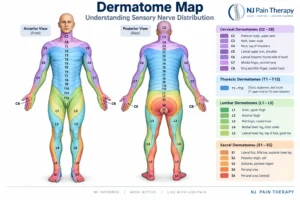
The location of numbness or tingling can help narrow down which nerve root may be involved.
Symptoms often follow predictable nerve patterns
Cervical radiculopathy symptoms often follow recognizable patterns. For example, one nerve may be linked with thumb numbness, while another may affect different fingers or parts of the forearm.
Specific arm weakness patterns can also help doctors understand which nerve is irritated. This is why symptom location matters during evaluation.
Neck Symptoms Often Happen Alongside Arm Symptoms
Neck pain and stiffness
Many people with cervical radiculopathy also have neck pain or stiffness. The neck may feel tight, sore, or limited in motion.
This can happen because muscles around the irritated area tighten protectively.
Pain with turning or extending the neck
Certain neck positions may make symptoms worse. Turning the head, looking up, or holding the neck in one position may increase pain, tingling, or radiating symptoms.
This can happen when those movements place more pressure on the irritated nerve root.
Muscle tightness and guarding
When the nervous system senses pain, the surrounding muscles may tighten. This guarding response is meant to protect the area, but it can also create more stiffness and discomfort.
Muscle guarding can make the neck feel locked, tense, or difficult to move normally.
Occipital headaches near the base of the skull
Some people with neck-related nerve irritation also experience headaches near the base of the skull. These are sometimes felt in the back of the head.
Headaches can happen alongside neck pain, stiffness, and muscle tension, especially when the upper neck is irritated.
Common Causes of Cervical Radiculopathy
Herniated discs in the neck
A herniated disc can press on or irritate a nearby nerve root. In the neck, this can cause symptoms that travel into the shoulder, arm, hand, or fingers.
The disc may bulge or rupture, and inflammation around the nerve root can make symptoms more intense.
Degenerative disc disease
As discs age, they can lose height and become less flexible. This can reduce the space where nerves exit the spine.
When that space narrows, also called foraminal narrowing, a nerve root may become irritated or compressed. This can lead to pain, numbness, tingling, or weakness.
Bone spurs and arthritis
Arthritis in the cervical spine can cause joint changes and bone spurs. These bony growths may narrow the spaces around nerves.
This process is often part of cervical spondylosis, or age-related wear and tear in the neck. If a nerve root becomes crowded or irritated, radiculopathy symptoms can develop.
Spinal stenosis
Spinal stenosis means there is reduced space around the spinal cord or nerve roots. In the neck, this can create chronic compression.
Symptoms may progress gradually and can include pain, numbness, tingling, weakness, or coordination changes depending on the level of compression.
Trauma or whiplash injuries
A fall, car accident, sports injury, or whiplash can irritate discs, joints, muscles, ligaments, and nerves in the neck.
Inflammation after trauma can place pressure on nerve roots or make existing narrowing more symptomatic. New radiating pain, numbness, or weakness after an injury should be evaluated.
Poor posture and repetitive strain
Poor posture and repeated neck stress can contribute to cervical irritation over time. Looking down at a phone, sitting at a desk for long hours, or repeating the same neck movements may increase stress on discs, joints, and muscles.
Over time, this strain can contribute to inflammation, stiffness, or nerve irritation.
Symptoms That May Indicate More Serious Nerve Compression
Increasing arm or hand weakness
Weakness that is getting worse should be evaluated promptly. If your arm feels weaker, your grip is fading, or you keep dropping objects, the nerve may not be functioning normally.
Progressive weakness can be a sign of more significant nerve compression.
Loss of coordination or grip strength
Trouble with hand coordination can also be concerning. You may notice difficulty buttoning clothes, typing, writing, holding utensils, or using tools.
These changes may suggest that nerve signals are being affected.
Severe numbness or spreading symptoms
Numbness that becomes severe, spreads, or does not improve should not be ignored. Ongoing compression can make nerve symptoms more persistent.
Prompt evaluation can help identify whether symptoms are coming from a compressed nerve root or another neurological issue.
Balance problems or walking difficulty
Balance problems or trouble walking may suggest more than a single pinched nerve. In some cases, pressure on the spinal cord can affect coordination, gait, or lower body function.
These symptoms should be evaluated quickly.
Symptoms affecting both arms
Cervical radiculopathy often affects one side, but symptoms in both arms can be more concerning. Bilateral symptoms may suggest wider nerve involvement or possible spinal cord compression.
This is especially important if symptoms include weakness, clumsiness, numbness, or coordination changes.
Loss of bladder or bowel control
Loss of bladder or bowel control with neck, back, arm, or leg symptoms is a medical emergency. It can signal serious neurological involvement and should be treated immediately.
Do not wait for a routine appointment if this occurs.
How Doctors Diagnose Cervical Radiculopathy
Reviewing symptom patterns
Diagnosis usually starts with a detailed conversation about your symptoms. A doctor may ask where the pain starts, where it travels, whether you have tingling or numbness, and what movements make symptoms better or worse.
The location and behavior of symptoms can give important clues about which nerve root is involved.
Physical examination and reflex testing
A physical exam may include checking neck range of motion, arm strength, reflexes, sensation, and coordination.
Doctors may compare one side of the body to the other to look for changes in nerve function. Certain neck or arm movements may also be used to reproduce or relieve symptoms.
MRI or X-ray imaging
X-rays can help show alignment, arthritis, bone spurs, and disc space narrowing. An MRI gives more detail about discs, nerves, and soft tissues.
Imaging may be recommended when symptoms are persistent, severe, worsening, or linked with weakness or numbness.
EMG and nerve testing when needed
In some cases, EMG or nerve conduction studies may be used to evaluate nerve function. These tests can help determine whether a nerve is working normally and whether symptoms may be coming from the neck or another nerve issue.
They can be especially useful when symptoms overlap with conditions like peripheral neuropathy or carpal tunnel syndrome.
Identifying the exact nerve root involved
The goal is to identify the specific nerve root causing symptoms and why it is irritated. That may involve a herniated disc, bone spur, arthritis, stenosis, or inflammation.
Once the source is clearer, the treatment plan can be more targeted.
Treatment Options for Cervical Radiculopathy
Physical therapy
Physical therapy is often one of the first treatments used for cervical radiculopathy. The goal is to improve neck mobility, posture, strength, and movement patterns while reducing pressure on irritated nerves.
Treatment may include stretching, strengthening exercises, posture correction, nerve mobility work, and ergonomic guidance. For many people, improving how the neck and shoulders move can help calm nerve irritation and restore function.
Anti-inflammatory medication when appropriate
Inflammation around a compressed nerve can make symptoms more intense. In some cases, anti-inflammatory medication may help reduce irritation and improve comfort.
This approach is usually part of a broader treatment plan rather than a long-term solution on its own. Medication decisions should always consider the patient’s overall health and medical history.
Activity and posture modifications
Daily habits can either calm or aggravate cervical radiculopathy symptoms. Looking down at a phone for long periods, poor desk posture, unsupported sitting, and repetitive neck strain can all increase pressure on irritated nerves.
Simple adjustments may help reduce flare-ups. This can include improving workstation setup, taking movement breaks, supporting the lower back while sitting, and avoiding positions that repeatedly trigger symptoms.
Cervical epidural steroid injections
A cervical epidural steroid injection may help reduce inflammation around an irritated nerve root in the neck.
The goal is to calm inflammation near the compressed nerve and reduce symptoms like radiating arm pain, tingling, numbness, or burning sensations. These injections are commonly considered when symptoms persist despite conservative treatment.
Temporary cervical collar use
In some situations, a temporary cervical collar may help limit neck movement and reduce irritation during an acute flare-up.
This is usually a short-term strategy rather than a long-term solution. Prolonged use can weaken supportive muscles, so collars are generally used selectively and under medical guidance.
Surgery when symptoms become severe or progressive
Most cases of cervical radiculopathy improve with non-surgical treatment. Surgery is usually considered only when symptoms become severe, progressive, or resistant to conservative care.
Increasing weakness, significant nerve compression, spinal cord involvement, or ongoing loss of function may require surgical evaluation. The goal of surgery is typically to relieve pressure on the affected nerve and protect long-term function.
Understanding Cervical Radiculopathy Symptoms Can Help You Seek Treatment Earlier
Cervical radiculopathy symptoms often involve radiating pain, tingling, numbness, weakness, burning sensations, or electric shock-like pain traveling from the neck into the arm or hand. These symptoms happen because a nerve in the neck is irritated or compressed.
If nerve compression continues, symptoms may worsen over time and become more difficult to manage. Proper diagnosis helps identify the exact nerve involved and guides the right treatment approach.
If you are experiencing persistent neck pain that radiates into the arm, causes numbness, weakness, tingling, or electric shock sensations, exploring pain management in New Jersey options can help identify the source and guide the next step toward relief.