
Most people forget the one detail that actually changes the plan. It’s not your pain score. It’s the pattern: where the pain travels, what triggers it, and what has already been tried.
This checklist helps you show up prepared so your visit is efficient and your plan is accurate, not trial and error. If pain is limiting work, sleep, or daily life, schedule an evaluation for pain management in New Jersey so you can confirm the pain generator and move forward with a stepwise plan.
Quick Summary
The point of this checklist is simple: help your provider identify the pain generator faster so you get a plan that fits your body and your goals. It also helps avoid repeat imaging, wasted visits, and “guessing” treatments that don’t match the driver.
The fastest way to use this checklist
Bring the essentials even if you do nothing else. If your case is complex, add the bonus items so your provider doesn’t have to rebuild your whole timeline from scratch.
The essentials: bring these no matter what
Your medication list
Bring a current list of everything you take: prescriptions, over the counter meds, and supplements. Include the dose and how often you take it. Also include anything you stopped recently and why, because “I tried it and it made me dizzy” matters just as much as “it didn’t help.”
Allergies and reactions
List medication allergies and any reactions you have had to injections or procedures in the past. If you have had issues with contrast dye or anesthesia, note that too. It changes how your provider plans future steps.
Your pain story in 60 seconds
You do not need a novel. You need a clean snapshot: When it started and what triggered it, if you know. Where it hurts and where it travels. What makes it worse, what makes it better, and what the pain stops you from doing. That short summary often points to the pattern faster than anything else.
Imaging: what to bring and how to avoid confusion
Prior imaging reports
Bring MRI, X ray, or CT reports if you have them. Include the date and the body part. Old imaging can still be useful, but only if everyone knows exactly what it is and when it was done.
Imaging discs or portal access
If you have discs, bring them. If you do not, bring the facility name and the date so the images can be requested. Reports help, but images can matter for certain decisions, especially if procedures are being considered.
When you do not need new imaging
You do not automatically need new imaging just because you have pain. If your symptoms and exam are clear and new imaging would not change decisions, your provider may focus on treatment first. The goal is not to collect scans. The goal is to build the right plan.
Treatment history: the part most people forget
Physical therapy summary
Write down when you went, how long you did it, what helped, and what flared you. If you still have home exercise notes, bring them. This helps your provider adjust the plan instead of repeating the same approach that already failed.
Prior injections and procedures
List what you had done, where it was done, and when. Include how long relief lasted and any side effects. “It helped for three days” and “it helped for three months” are completely different signals.
Surgeries and operative notes
If you have had spine or joint surgery, bring the operative report if available. If you do not have it, write down the surgeon or facility and the approximate date so it can be pulled if needed.
Symptoms to track for 3 to 7 days before the visit
Pain map
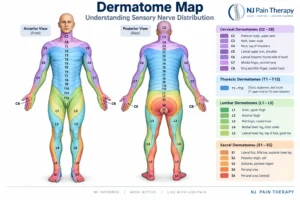
Note the exact location and whether pain travels. Track any numbness, tingling, or weakness and where you feel it. Radiation patterns are often the clue that separates nerve pain from joint or soft tissue drivers.
Triggers and relief
Track your best and worst triggers and what helps and for how long. Note sleep disruption and morning stiffness, because those details often reveal whether inflammation, mechanics, or nervous system sensitivity is driving the pattern.
Function limits
Write down what pain is limiting in real life: walking tolerance, sitting tolerance, work tasks, stairs, driving, and exercise. Function is what the plan is trying to restore, so this matters as much as pain intensity.
Questions to write down: show up with a plan
Diagnosis questions
Ask these early because they stop the guessing:
- What pain generator do you suspect is driving my symptoms
- What pattern supports that diagnosis
If your provider can explain the pattern clearly, the rest of the plan usually gets clearer fast.
Treatment questions
These questions make sure you leave with real next steps, not vague advice:
- What is the stepwise plan from here
- What is the next step if this works
- What is the next step if it does not
A good plan always includes a “what if” so you are not stuck if the first move is not enough.
Safety questions
These are the ones people forget until it is too late:
- Do I need to change any medications before procedures
- What about blood thinners and supplements
- What are my activity restrictions and rehab expectations after treatment
Optional but helpful: bring these if they apply
Referral notes and prior specialist notes
If you have notes from orthopedic, neurosurgery, rheumatology, or primary care, bring them. They often contain key exam findings and the exact reasoning behind prior recommendations.
Lab results if relevant
If your case involves inflammation concerns, autoimmune workups, or diabetes, labs can matter. Think inflammatory markers when relevant and A1C if you are diabetic, plus any other labs your provider has already tied to your symptoms.
Insurance and authorization basics
Bring your insurance card. If you have prior authorization history or denial letters for imaging or procedures, bring those too. It can save weeks of back and forth.
What not to bring: avoid overwhelm
Avoid giant stacks without summaries
A massive pile of papers slows the visit down. Bring key reports and a one page summary instead. If you have a lot of history, a simple timeline beats a binder.
Avoid guessing dates and procedures
If you are not sure, do not guess. Write the clinic name and an approximate timeframe. That is enough for your provider to track it down accurately.
Day of appointment: practical tips
What to wear
Wear comfortable clothing that allows movement testing and easy exam access. If the pain is spine, hip, or knee related, tight jeans are the enemy.
Arrive early
Paperwork almost always takes longer than you think, especially if you are transferring records.
Bring a support person if needed
If pain brain or anxiety is real, bring someone. A second set of ears helps you remember what was said and what the plan actually is.
Frequently Asked Questions About What to Bring to a Pain Management Appointment
Do I need an MRI before seeing pain management
Not always. Many cases can be evaluated based on your symptoms and exam first. Imaging is most useful when it changes the plan or improves procedural targeting and safety.
What if I cannot get my imaging disk
Bring the facility name and the date of the scan. Most clinics can request images directly or access them through connected systems, but they need the specifics.
Should I stop pain meds before the visit
Do not stop anything unless your prescribing clinician tells you to. Bring your full medication list and ask what should change, if anything, especially if procedures are being discussed.
Will I get an injection on the first visit
Usually not unless it was already planned or clearly indicated and scheduled. Most first visits focus on diagnosis and building the right stepwise plan.
What if PT made me worse
That is common when the plan does not match the pain generator or the progression is too aggressive. Your provider can adjust the approach, confirm the driver, and help you find a movement “dose” that builds tolerance instead of triggering flares.
Conclusion
Prepared patients get faster answers and better plans. Bring your meds and allergies, imaging reports if you have them, and a short pain timeline. Bring treatment history and track function for a week if you can, because function is the real target.
Schedule a pain management appointment in New Jersey and bring this checklist so your provider can identify your pain generator and build your plan faster.