
If you’re trying to figure out whether this feels like spinal stenosis or a herniated disc, the fastest way to stop guessing is to map your symptoms to a real pain pattern and confirm the driver. If you want a clear plan and non-surgical options in New Jersey, book an evaluation with a pain management specialist.
Quick Summary
The simplest difference
- Spinal stenosis: usually a narrowing problem that compresses nerves and tends to flare with standing and walking.
- Herniated disc: usually a disc material problem that irritates a nerve and tends to cause sharper, radiating pain.
The symptom clue people miss most
- Stenosis: leg heaviness or cramping with walking that eases when you sit or lean forward.
- Disc: pain that shoots down the leg or arm, often worse with bending, sitting, coughing, or sneezing.
What to do next
Start with the pattern, rule out red flags, and use imaging only when it changes decisions. Then treat stepwise: rehab and meds first, targeted injections if indicated, and surgery only when it’s truly necessary.
First: when back or neck pain is an emergency
Red flags that need urgent evaluation
- New loss of bladder or bowel control
- Severe weakness, worsening numbness, saddle anesthesia
- Fever or chills with severe spine pain
- Major trauma or suspected fracture
- Unexplained weight loss, cancer history, night pain that doesn’t let up
- Chest pain, shortness of breath, severe abdominal pain
What spinal stenosis is
Plain-English definition
Spinal stenosis means the “space” for nerves is getting tighter, usually from age-related changes like arthritis, thickened ligaments, and bone spurs.
Where it happens
- Lumbar stenosis: low back and legs
- Cervical stenosis: neck and arms, sometimes balance or coordination issues
The classic stenosis pattern
- Symptoms worsen with standing or walking
- Symptoms improve when sitting or leaning forward
- Walking tolerance becomes the limiting factor
What a herniated disc is
Plain-English definition
A herniated disc happens when the inner disc material pushes through a weak spot in the outer layer and irritates a nearby nerve.
The classic herniated disc pattern
- Sharp pain with radiation into an arm or leg
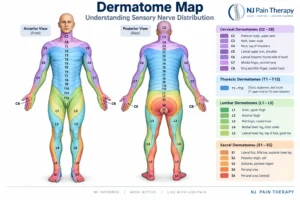
- Tingling or numbness in a specific nerve distribution
- Pain often worse with sitting, bending, twisting, coughing, sneezing
Important reality check
A disc can look herniated on MRI and still not be the main pain driver. Symptoms and exam findings matter.
Spinal stenosis or herniated disc: how to tell by symptoms
Pain quality and location
- Stenosis: more aching, cramping, heaviness with activity
- Disc: more sharp, electric, shooting pain down a limb
What makes it worse
- Stenosis: standing, walking, extension
- Disc: sitting, bending forward, lifting, twisting
What makes it better
- Stenosis: sitting, leaning forward, brief rest
- Disc: changing positions, reducing provocation, time plus rehab
Mobility and function clues
- Stenosis: walking distance shrinks first
- Disc: specific movements trigger the “zap” and limit bending or sitting tolerance
Diagnosis: how clinicians confirm the driver
Step 1: history that actually matters
Timeline, triggers, what relieves it, what’s getting worse, what’s limiting life.
Step 2: physical exam and neurologic screen
Strength, sensation, reflexes, range of motion, and provocative maneuvers.
Step 3: imaging when it’s useful
- MRI is often used when symptoms persist, are severe, or there are neurologic deficits.
- X-ray can help with alignment and arthritis context.
- CT is sometimes used when MRI isn’t available or in specific scenarios.
Step 4: match the findings to the pattern
The goal is not to “find something” on imaging: it’s to confirm the pain generator so treatment isn’t random.
Treatment options: spinal stenosis
Conservative foundation
- Activity modification and pacing
- Physical therapy focused on tolerance, mobility, and stability
- Medication strategy when appropriate
Injections when inflammation is part of the problem
Epidural steroid injections can reduce inflammation around irritated nerves and improve walking tolerance in some cases.
When procedures or surgery enter the conversation
If symptoms are progressive, function keeps shrinking, or neurologic deficits develop, surgical decompression may be discussed. The decision is driven by severity and impact, not just the MRI.
Treatment options: herniated disc
Conservative foundation
- Relative rest, not bed rest
- Physical therapy to calm irritation and rebuild tolerance
- Medication strategy when appropriate
Epidural steroid injections
Often considered when radiating symptoms persist, plateau, or block rehab progress.
Surgery: when it’s actually on the table
Usually discussed when there’s severe or progressive weakness, major neurologic deficits, or persistent disabling symptoms despite a real conservative trial.
Why pain management is often the best “next step”
Because back pain is not one diagnosis
Pain management focuses on identifying the driver: disc vs facet vs SI joint vs nerve vs soft tissue.
Because treatment can be stepwise instead of trial and error
You move from least invasive to more targeted options based on response, not guesswork.
Because you can often avoid unnecessary escalation
The right treatment for the right pattern can cut down on repeat flare-ups, wasted time, and “random” imaging chasing.
Decision guide: what should you do next
If your main issue is walking tolerance and relief when leaning forward
Think stenosis pattern: evaluate, confirm, treat for tolerance, consider an epidural if appropriate.
If your main issue is sharp radiating pain into an arm or leg
Think disc or nerve irritation pattern: evaluate, rehab, consider an epidural if plateauing.
If you’re stuck in the middle
Recurring flares, sleep disruption, or inability to work: that’s when a pain management consult is often the most efficient move.
Frequently Asked Questions About The Differences Between Spinal Stenosis and Herniated Discs
Can a herniated disc cause spinal stenosis
Sometimes. A disc bulge or herniation can contribute to narrowing, especially when combined with other degenerative changes.
What symptom most strongly suggests stenosis
Leg symptoms with walking that improve with sitting or leaning forward.
Do I need an MRI right away
Not always. Imaging is most useful when it changes the plan, or when symptoms persist, worsen, or come with concerning neurologic signs.
Can I avoid surgery
Many people can, depending on severity, pattern, and response to stepwise care.
Key Takeaways + CTA
Quick recap
- Spinal stenosis or herniated disc: the pattern usually tells you which is more likely
- Stenosis: walking and standing worsen symptoms, leaning forward helps
- Disc: sharper radiating pain, often worse with sitting and bending
- Diagnosis should match symptoms, exam, and imaging: not imaging alone
- Best outcomes come from treating the driver and progressing stepwise
Conclusion
If you want an answer that’s based on your actual pattern, not generic advice, schedule an evaluation for pain treatment in New Jersey so you can confirm the pain generator and map out the right next steps.