
If you’re researching ReActiv8 because back pain keeps stealing your day, book an evaluation with Shane Huch—a pain management doctor providing pain treatment in New Jersey—so you can figure out your real pain generator and whether restorative neurostimulation even fits.
Quick Summary
- ReActiv8 is an implanted system that helps retrain a key stabilizing back muscle (the multifidus) so your spine gets better support again—this is why it’s described as restorative, not just “pain blocking.”
- It’s mainly for mechanical chronic low back pain tied to multifidus dysfunction, especially when PT and standard medical management haven’t gotten you where you need to be.
- The basics are simple: implant → recover → activate → two short therapy sessions per day, and improvements usually build over weeks to months (not overnight).
- Like any implant, there are real risks and a recovery window, plus practical day-to-day considerations (movement restrictions early, learning the routine, follow-ups for programming).
What ReActiv8 is
Plain-English definition
ReActiv8 is a surgically implanted restorative neurostimulation device designed to help people with chronic low back pain by activating the multifidus muscle—one of the main muscles that stabilizes your spine.
What “restorative neurostimulation” actually means
Most pain treatments are palliative—they aim to reduce pain signals (like certain injections, medications, or spinal cord stimulation). ReActiv8 is positioned differently: it’s trying to restore function by improving neuromuscular control of the multifidus.
In plain terms: it’s less “mute the alarm” and more “fix what’s making the alarm keep going.”
Multifidus dysfunction explained (why stability matters)
The multifidus is a deep stabilizing muscle that helps keep the spine controlled during daily movement. In some people with mechanical chronic low back pain, the multifidus gets inhibited—meaning it doesn’t fire properly. That can lead to less spinal support, more “uncontrolled loading,” and pain that just keeps hanging around.
ReActiv8 aims to wake that system back up and help the muscle re-condition over time.
Who ReActiv8 is For
Mechanical chronic low back pain vs nerve pain (high-level)
- Mechanical chronic low back pain is often driven by movement, posture, and loading—it can feel worse with certain positions or activity and better with others.
- Nerve pain tends to feel more like burning, shooting, electric pain, often with numbness/tingling and can travel into a leg.
You can have overlap, but ReActiv8 is primarily discussed in the context of mechanical low back pain linked to multifidus dysfunction, not “pure sciatica.”
Typical candidate checklist
ReActiv8 is commonly discussed for people who fit patterns like:
- Chronic low back pain (often 6+ months)
- Limited relief with PT / medical management
- Not a spine-surgery candidate (and not currently needing surgery)
- Willing + able to commit to the therapy routine (usually two 30-minute sessions a day early on)
Who it’s usually not for (keep general)
ReActiv8 generally isn’t positioned as a fit when:
- There are active surgical indications (something structural that clearly needs surgery)
- There are major red flags that require urgent workup (infection/cancer/serious neurologic issues)
- The pattern is non-mechanical dominant, unclear, or mainly driven by something else that hasn’t been identified yet
Bottom line: candidacy is about whether your pain is truly driven by the type of dysfunction ReActiv8 is built to address.
How ReActiv8 Works
The core concept: retraining muscle control
ReActiv8 sends an electrical impulse that helps activate the multifidus. Over time, consistent activation is meant to help the muscle re-learn proper control and build strength/endurance—which can improve stability and reduce pain.
What’s implanted + where it targets (high-level)
At a high level, the system includes:
- A small implanted pulse generator (battery/device)
- Leads placed to stimulate the pathway that activates the multifidus
It’s all internal—your job is using the handheld remote to run the therapy sessions as prescribed.
Why results are progressive (not instant)
Because the goal is restoring function, results tend to be gradual. You’re essentially retraining a stabilizing system that’s been underperforming for a long time. Most people who benefit notice function improvements first, and then pain tends to follow.
The Patient Journey
Phase 1 — Discovery (education + diagnosis)
This is where you dial in whether your pain fits the “mechanical + multifidus dysfunction” pattern. Expect talk about how your pain behaves, movement tolerance, what PT has (and hasn’t) changed, and whether there’s evidence of impaired stabilization.
Phase 2 — Decision (restorative vs palliative options)
This is the “choose the strategy” step. ReActiv8 is typically framed as a restorative option, while things like medications, injections, RFA, or SCS are often framed as more symptom-focused or signal-focused options.
Phase 3 — Preparing for implant (pre-op planning)
Pre-op is mostly logistics + medical readiness:
- medication review
- day-of planning
- expectations for restrictions and follow-ups
Phase 4 — Post-implant & using therapy
You recover first, then the device is activated at a follow-up visit. After that, you start the routine—typically two 30-minute sessions per day—and your team adjusts programming over time.
Phase 5 — Long-term expectations (follow-ups + tuning)
Programming and follow-ups exist because your body changes as it improves. Follow-ups are used to optimize stimulation, track progress, and adjust the plan as you rebuild control and confidence.
The Procedure and Recovery
Procedure overview (60–90 minutes, outpatient/ambulatory)
ReActiv8 is typically described as an outpatient implant procedure that takes roughly 60–90 minutes. Most people go home the same day with post-op instructions and a follow-up plan.
Incisions + “pocket pain” reality
You’ll usually have two incision sites—one for lead placement and one where the battery/device sits. It’s common to feel pocket soreness early on while your body settles around the device.
Early restrictions (water, lifting, bending/twisting, walking encouraged)
Early recovery tends to be about protecting healing tissue and preventing lead issues:
- No submerging in water until cleared (showers are usually allowed after a short window, per your surgeon’s protocol)
- Limit bending/twisting to extremes
- No heavy lifting early on (often “nothing heavier than a gallon of milk” is the simple rule you’ll hear)
- Walking is encouraged—movement without overdoing it is usually the goal
If pain spikes, drainage appears, fever shows up, or symptoms change fast—call your provider.
Activation and Daily Therapy
When therapy starts (often ~10–14 days post-op)
ReActiv8 usually isn’t turned on immediately after surgery. Most people start therapy at the activation follow-up, often about 10–14 days post-op, once the incisions are healing and your provider is ready to program your settings.
Typical schedule (two 30-minute sessions/day)
The standard routine is simple and consistent:
- Two sessions per day
- About 30 minutes each
- Pick times you can actually stick to (most people do morning + evening)
This is one of those treatments where consistency matters more than intensity.
What sessions feel like + positioning basics
Sessions typically feel like a gentle, rhythmic activation in the low back—more “muscle working” than “pain being zapped.” It shouldn’t feel sharp, scary, or like it’s jolting you.
Positioning is usually straightforward:
- You’ll use the position your clinician recommends (commonly lying down, not sitting upright)
- The goal is a stable, repeatable setup so the stimulation hits the right muscles the same way every time
If something feels off—new pain, weird pulling, or the sensation changed dramatically—don’t tough it out. That’s usually a programming or positioning fix, not a “push through” moment.
What to do if you miss sessions (simple guidance)
Missing a session isn’t the end of the world. The move is:
- Don’t double up to “make up” time unless your clinician specifically tells you to
- Just resume the normal schedule at the next planned session
- If you’re missing frequently, that’s a signal to adjust timing—not to guilt yourself
Follow-Ups, Programming, and Long-Term Use
Follow-up cadence (1, 3, 6 months + as needed)
After activation, follow-ups are typically structured something like:
- 1 month
- 3 months
- 6 months
- then as needed based on progress
The point is to track function, refine settings, and make sure you’re trending the right direction.
Why programming changes over time
Your body isn’t static. As your multifidus starts responding and your movement patterns change, the “best” settings can change too. Programming tweaks are normal because they’re aligning the therapy with:
- how your muscles are responding
- what positions feel best
- your functional goals (walking tolerance, standing tolerance, lifting, etc.)
Battery and replacement basics (high-level)
The implanted device has a battery with a multi-year lifespan (exact timing depends on the device and your usage). If the battery eventually needs replacement, it’s typically handled with a short procedure to swap the generator—your provider will walk you through what that looks like for your situation.
Results and What to Expect
When improvement typically starts (often weeks to a few months)
ReActiv8 isn’t usually an “instant relief” therapy. Many patients start noticing changes between several weeks and a few months, and it can keep improving beyond that.
Function-first wins (confidence, movement tolerance, stability)
The first real “wins” are often functional:
- you feel steadier
- your back feels more supported
- you tolerate walking/standing longer
- daily movement feels less fragile
That’s the therapy doing what it’s designed to do—restore control, not just suppress symptoms.
Pain reduction tends to follow function gains
A helpful way to think about it: function improves first, pain follows. As stability and control improve, the back often stops reacting like every movement is a threat.
Durability framing (long-term outcomes discussed in studies)
ReActiv8 is often discussed in terms of durable, long-term outcomes in clinical research—meaning the benefit is framed as something that can hold up over time for appropriately selected patients who stay consistent.
Risks, Side Effects, and Safety
General surgical risks (infection, bleeding, incision issues)
Like any implant procedure, there are standard surgical risks:
- infection
- bleeding
- delayed wound healing
- incision pain or irritation
Device-specific risks (lead migration, malfunction, persistent pain)
There are also device-specific considerations:
- lead migration (movement of a lead that can affect therapy)
- device malfunction
- persistent pain (or pain that doesn’t improve as hoped)
- need for reprogramming or, in some cases, revision
None of that is meant to scare you—just to keep expectations honest.
When to call your doctor after implant (fever, drainage, severe pain, etc.)
Call your provider promptly if you notice:
- fever
- drainage, spreading redness, warmth, or worsening swelling at an incision
- severe pain that escalates instead of settling
- new or worsening weakness/numbness
- anything that feels like a sudden “shift” in symptoms
If it feels urgent, treat it like it is.
Imaging, Travel, and Real-Life Logistics
CT/X-ray/ultrasound/fluoroscopy notes
Most routine imaging like X-ray, CT, ultrasound, and fluoroscopy is generally compatible with implanted devices like this. Your care team can confirm specifics for your system.
MRI considerations (confirm device-specific guidance)
MRI is the one that requires extra attention. Don’t assume anything.
- Confirm your device’s MRI status
- Follow the device manual / clinician guidance
- Tell any imaging facility you have an implant before scheduling
Metal detectors, travel, and daily activity questions
Most people travel normally with implanted devices. Practical tips:
- carry your device ID card
- don’t linger in metal detector gates
- if you’re wanded, ask the agent not to hold it over the implant longer than needed
- for “can I do ___?” activity questions, your provider’s post-op restrictions win—especially early
ReActiv8 vs Other Low Back Pain Treatments
ReActiv8 vs spinal cord stimulation (SCS)
- SCS is typically positioned to modulate pain signaling (palliative approach).
- ReActiv8 is positioned to restore multifidus control and stability (restorative approach).
Different target, different goal.
ReActiv8 vs RFA/medial branch blocks (facet pathway)
If pain is facet-mediated, the common pathway is:
- diagnostic medial branch blocks → RFA if confirmed
That’s more “shut down the signal source.” ReActiv8 is more “rebuild support so the spine loads better.” Sometimes they’re alternatives, sometimes they’re complementary—depends on the pain generator.
ReActiv8 vs temporary PNS / TENS (high-level)
- Temporary PNS can be used to modulate pain via peripheral nerves (often a short-term device with longer-term intent).
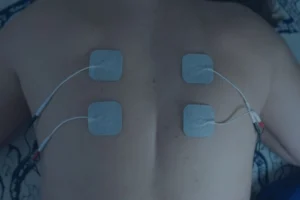
- TENS is external and generally less targeted/deep.
- ReActiv8 is specifically about muscle activation and spinal stability over time.
Where “restorative” fits in a full care plan
ReActiv8 tends to fit when the story is: mechanical low back pain + multifidus dysfunction + conservative care didn’t stick + you want a function-first plan.
Insurance and Practical Planning
Prior auth + documentation that typically matters
Coverage often comes down to documentation like:
- diagnosis and pain history
- duration (often chronic, months+)
- what conservative care you’ve tried (PT, meds, etc.)
- functional limitations and how pain impacts daily life
- why surgery isn’t the plan (or isn’t appropriate)
Appeals/support programs (high-level mention)
Some pathways include support for prior authorization and appeals. Your clinic can tell you what help exists and what paperwork is typically needed.
Timing around work, PT, and life events
Plan around:
- the early restriction window (lifting/bending/twisting limits)
- your activation and early follow-ups
- work travel and major events
If you’re stacking PT, schedule it so you can actually recover, not overload yourself.
FAQs
Is ReActiv8 like a spinal cord stimulator?
Both are neuromodulation, but the goal is different. ReActiv8 targets multifidus activation and stability, while SCS targets pain signal modulation.
Will it help nerve pain?
It’s mainly positioned for mechanical chronic low back pain tied to multifidus dysfunction. If your pain is primarily nerve-driven, your provider should say that clearly and discuss better-fit options.
Can I get it if I had back surgery?
Sometimes yes, sometimes no—this is case-specific. The key question is whether your current pain pattern fits the indication and whether there are surgical factors that change the plan.
When will I feel results?
Often weeks to a few months. Many people notice function changes first, then pain reduction.
Can it be removed later?
Yes—ReActiv8 is considered reversible. If it needs to come out for any reason, it can be removed by your physician.
How long does the battery last?
Battery life varies by use and device specifics, but it’s generally multi-year. Your provider will give the realistic range.
Conclusion
- ReActiv8 is designed to be restorative: it targets multifidus control to improve spinal stability.
- It’s typically for mechanical chronic low back pain with a multifidus dysfunction pattern—not random back pain of unknown cause.
- Expect a progressive timeline: function improvements often come before pain reduction.
- Consistency matters: two daily sessions is the core of the therapy.
- Follow-ups and programming are normal—they help the therapy stay aligned with your pain map and goals.
- Like any implant, there are real risks and a recovery window—know the red flags.
- The deciding factor should be your pain generator, not hype.
If you want a real answer on whether ReActiv8 makes sense for your back pain pattern, book a consult with Shane Huch—a pain management doctor in New Jersey who performs ReActiv8—and get a plan based on your “pain generator,” not guesswork.