
Pain that changes locations isn’t random, and it’s not “all in your head.” When pain shifts around the body, it’s usually a pattern, not a diagnosis. That pattern often reflects how your nervous system is processing signals, how your body is compensating for weak or stiff areas, and how well you’re recovering — not a string of brand-new injuries.
Pain movement doesn’t mean your body is falling apart. It means something in the system isn’t balanced.
In this guide, you’ll learn why pain shifts, what it actually means, and when it’s time to take action instead of chasing symptoms. If your pain keeps changing locations and you’re not sure why, a pain management specialist can help identify the underlying pattern — not just chase symptoms.
What Does “Pain Shifting” Actually Mean?
Pain shifting (also called migrating pain) refers to discomfort that changes location over time without a clear new injury. One week it’s your shoulder. Then your low back. Later, your hip or knee.
This happens because pain doesn’t always originate where it’s felt.
There are three main pain types involved:
- Localized pain: Pain felt directly at the injured or irritated tissue.
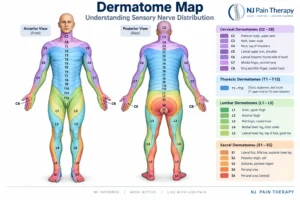
- Referred pain: Pain felt away from the source due to shared nerve pathways.
- Nervous-system-driven pain: Pain influenced by heightened sensitivity in the brain and spinal cord rather than ongoing tissue damage.
Because of this, pain location alone doesn’t tell the full story. The pattern, timing, and triggers matter far more than the exact spot that hurts today.
What Does “Pain Shifting” Actually Mean?
Pain shifting (also called migrating pain) refers to discomfort that changes location over time without a clear new injury. One week it’s your shoulder. Then your low back. Later, your hip or knee.
This happens because pain doesn’t always originate where it’s felt.
There are three main pain types involved:
- Localized pain: Pain felt directly at the injured or irritated tissue.
- Referred pain: Pain felt away from the source due to shared nerve pathways.
- Nervous-system-driven pain: Pain influenced by heightened sensitivity in the brain and spinal cord rather than ongoing tissue damage.
Because of this, pain location alone doesn’t tell the full story. The pattern, timing, and triggers matter far more than the exact spot that hurts today.
The Main Reasons Pain Moves Around the Body
Nervous System Sensitization
When pain sticks around long enough, the nervous system can become overly alert — a process known as central sensitization. The brain starts interpreting normal sensations as threats.
In simple terms, the pain “volume knob” gets turned up.
This is why pain can feel intense even when imaging looks normal. The pain is still real — it’s just being driven more by signal processing than fresh tissue damage.
Muscle Compensation and Movement Imbalances
When one area doesn’t move or function well, other areas compensate.
Examples:
- Weak hips → overloaded lower back
- Tight shoulders → neck pain
- Poor core stability → rotating joint pain
Over time, compensation spreads stress across the body, creating rotating pain sites instead of one consistent problem area.
Unresolved Minor Injuries
Many people “push through” small injuries — a stiff neck, a rolled ankle, a sore back — and never fully rehabilitate them.
Even after pain fades, movement patterns often stay altered. Those subtle changes quietly shift load elsewhere, causing pain to appear later in a completely different area.
Stress and Emotional Load
Stress doesn’t just affect mood — it affects muscle tension, breathing, posture, and pain sensitivity.
When the nervous system stays activated, pain often settles into:
- The neck and shoulders
- The lower back
- The hips or jaw
This pain is biological, not imagined. Emotional load directly influences how the body processes pain signals.
Inadequate Recovery and Overload
Training hard, working long hours, or staying constantly “on” without recovery leads to low-grade inflammation and tissue fatigue.
Pain may show up wherever the body is most stressed that week — which is why the location keeps changing depending on recent activity.
Poor Sleep
Sleep is when tissues repair and the nervous system resets. Poor sleep disrupts both.
Sleep deprivation:
- Increases pain sensitivity
- Slows tissue recovery
- Makes posture and overuse pain more noticeable
This is why shifting pain often worsens during periods of poor or inconsistent sleep.
Common Patterns of Shifting Pain
Shifting pain tends to follow predictable patterns, even if it feels random in the moment. The key is looking at sequences, not single flare-ups.
Common examples
- Neck → shoulder → posture fatigue, scapular weakness
- Lower back → hip or hamstring → glute weakness, hip mobility limits
- Hip → opposite hip or back → compensation and uneven loading
- Knee → foot or ankle → altered gait or ankle stiffness
- Shoulder → neck or upper back → muscle guarding and overuse
The takeaway: patterns reveal the driver. Isolated pain points rarely do.
What Pain Shifting Is — and Is Not
What it is
- A signal of imbalance, sensitivity, or overload
- A reflection of how the nervous system and movement system are coping
- A clue that recovery or mechanics need adjustment
What it is not
- Random
- A sign of weakness
- “All in your head”
Chasing symptoms — treating only the spot that hurts today — often delays real relief because the root cause stays active.
How Doctors and Pain Specialists Evaluate Shifting Pain
Effective evaluation looks beyond today’s pain location.
Key components include:
- Whole-body history: where pain started, how it moved, what triggers it
- Movement and posture assessment: how load shifts during daily activity
- Neurological screening: strength, reflexes, sensation when needed
Imaging alone rarely explains migrating pain. Findings only matter when they match symptoms and patterns, not just what shows up on a scan.
What You Can Do to Stop the Pain From Moving
Address the Whole System
Treat patterns, not locations. Correct how your body loads, moves, and recovers instead of chasing flare-ups.
Strengthen, Don’t Just Stretch
“Tight” muscles are often weak and overworked, not short. Progressive strengthening restores balance and reduces compensation.
Restore Nervous System Balance
Consistent, non-threatening movement and calming strategies help lower pain sensitivity and stop pain from jumping sites.
Improve Recovery Habits
- Prioritize sleep quality
- Manage stress proactively
- Pace activity instead of boom-and-bust cycles
Track Triggers and Patterns
A simple pain + activity journal often reveals repeat drivers like sitting time, poor sleep, stress spikes, or missed recovery.
When Shifting Pain Needs Medical Attention
Shifting pain should be evaluated when:
- Pain spreads more frequently
- Intensity or duration increases
- Numbness, tingling, or weakness appears
- Sleep or daily function is affected
- Pain never fully resolves between flare-ups
FAQs — Pain Shifting
Why does my pain keep changing locations?
Because compensation, nervous system sensitivity, and recovery issues can shift load across different tissues over time.
Can pain shift without injury?
Yes. Pain can move due to movement imbalances, stress, or nervous system sensitization without new tissue damage.
Is shifting pain nerve-related?
Often partially. Nerves influence how pain is perceived and can amplify symptoms across different areas.
Can stress cause pain to move?
Yes. Stress increases muscle tension and pain sensitivity, allowing discomfort to show up in multiple regions.
When should shifting pain be evaluated?
When it’s persistent, worsening, recurring, or interfering with sleep, work, or movement.
Conclusion: Pain Shifting Is a Message, Not a Mystery
Shifting pain doesn’t mean you’re broken. It means your body is adapting under stress, imbalance, or poor recovery. Pain patterns show how the body is coping — not failing. Addressing the full system early prevents long-term cycles of flare-ups and frustration. If your pain keeps moving and you’re tired of guessing why, the Center for Regenerative Therapy and Pain Management can help identify the root cause and create a plan that restores stability — not just temporary relief.