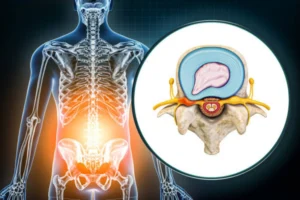

Pain that radiates down leg symptoms are extremely common—and while many people experience them at some point, they’re not something you should ignore. When leg pain travels instead of staying in one spot, it’s your body signaling that something deeper is going on.
It’s important to understand that pain radiating down the leg is a pattern, not a diagnosis. The way pain moves tells us how the nervous system or surrounding structures are being affected, but it doesn’t automatically point to a single condition.
In many cases, nerve irritation is involved—but not always. Muscles, joints, discs, and inflammation can all contribute to leg pain that travels. In this guide, you’ll learn what causes radiating leg pain, how to recognize different symptom patterns, and when it’s time to seek professional pain management care.
What Does It Mean When Pain Radiates Down the Leg?
Radiating pain behaves very differently from localized pain. Instead of staying confined to one area, it follows a pathway—often from the lower back or hip down into the leg.
Nerves transmit signals along predictable routes. When a nerve is irritated, compressed, or inflamed, pain can travel along that nerve’s entire length. That’s why leg pain often starts higher up, even if your back doesn’t hurt much.
In many cases, the source of leg pain isn’t the leg itself. The lower spine, pelvis, and hip region commonly trigger pain that radiates downward because that’s where major nerve roots exit and travel toward the leg.
What Does It Mean When Pain Radiates Down the Leg?
Radiating pain behaves very differently from localized pain. Instead of staying confined to one area, it follows a pathway—often from the lower back or hip down into the leg.
Nerves transmit signals along predictable routes. When a nerve is irritated, compressed, or inflamed, pain can travel along that nerve’s entire length. That’s why leg pain often starts higher up, even if your back doesn’t hurt much.
In many cases, the source of leg pain isn’t the leg itself. The lower spine, pelvis, and hip region commonly trigger pain that radiates downward because that’s where major nerve roots exit and travel toward the leg.
Common Symptoms of Radiating Leg Pain
Radiating leg pain often feels different from muscle soreness or joint stiffness. Common symptoms include:
- Sharp, burning, or electric sensations rather than dull aches
- Pain traveling from the low back or buttock into the thigh, calf, or foot
- Tingling, numbness, or a pins-and-needles feeling
- Weakness or heaviness in the leg
- Pain that worsens with sitting, standing, bending, or specific movements
These symptoms can vary in intensity throughout the day and may come and go depending on posture, activity, and inflammation levels.
Most Common Causes of Pain Radiating Down the Leg
Sciatica (Most Common Cause)
Sciatica occurs when the sciatic nerve becomes compressed or irritated. This large nerve runs from the lower spine through the buttock and down the back of the leg.
Common sources include disc herniation, spinal stenosis, or muscle compression. Symptoms often affect one side of the body and can range from mild tingling to severe, shooting pain.
Herniated or Bulging Disc
A herniated or bulging disc can press directly on nearby nerve roots. When this happens in the lumbar spine, pain frequently radiates into the leg.
In many cases, leg pain feels worse than back pain because nerves are more sensitive than surrounding structures. The specific path of pain depends on which disc level is involved.
Spinal Stenosis
Spinal stenosis involves narrowing of the spaces where nerves travel. This narrowing reduces room for nerve roots, leading to irritation during standing or walking.
Leg pain from stenosis often worsens with prolonged standing or walking and improves with sitting or bending forward, which temporarily opens nerve spaces.
Where the Pain Travels — Why Location Matters
Pain that radiates down leg symptoms can tell you a lot based on where the pain travels. Location isn’t random—it often points directly to which nerve or structure is involved.
Pain limited to the buttock often suggests muscle-related compression or early nerve irritation. Pain that travels into the thigh, calf, or foot is more likely nerve-driven and coming from the spine.
Front-of-the-leg pain versus back-of-the-leg pain also matters. Pain down the back of the leg is commonly linked to the sciatic nerve, while pain along the front or side of the leg may involve different lumbar nerve roots. The farther pain travels, the more likely nerve involvement becomes.
Where the Pain Travels — Why Location Matters
Pain that radiates down leg symptoms can tell you a lot based on where the pain travels. Location isn’t random—it often points directly to which nerve or structure is involved.
Pain limited to the buttock often suggests muscle-related compression or early nerve irritation. Pain that travels into the thigh, calf, or foot is more likely nerve-driven and coming from the spine.
Front-of-the-leg pain versus back-of-the-leg pain also matters. Pain down the back of the leg is commonly linked to the sciatic nerve, while pain along the front or side of the leg may involve different lumbar nerve roots. The farther pain travels, the more likely nerve involvement becomes.
Pain Patterns That Help Identify the Cause
Certain patterns make radiating leg pain easier to interpret.
Pain that worsens with sitting often points to disc-related pressure or nerve compression. Pain that worsens with standing or walking may suggest spinal stenosis or joint-related narrowing.
Night pain can indicate inflammation or heightened nerve sensitivity, while pain that improves with movement often suggests mechanical stiffness rather than severe nerve damage. Pain that eases as the day goes on usually reflects joints and muscles “warming up.”
Pain that worsens with coughing, sneezing, or straining is a classic sign of disc-related nerve irritation, since these actions increase spinal pressure.
When Radiating Leg Pain Is a Red Flag
Some symptoms mean radiating leg pain should not be ignored.
Progressive weakness in the leg or foot is a serious concern. Numbness that spreads or worsens over time suggests ongoing nerve compromise.
Pain lasting longer than one to two weeks without improvement, difficulty walking or standing, or changes in balance all warrant evaluation. Bowel or bladder changes are urgent and require immediate medical attention.
How Doctors Diagnose Pain Radiating Down the Leg
Diagnosis starts with understanding the symptom timeline—when the pain began, how it behaves, and what triggers or relieves it.
A neurological exam checks strength, reflexes, and sensation to identify nerve involvement. Posture and movement testing helps determine whether pain is mechanical, muscular, or nerve-related.
Imaging such as MRI can be helpful, but only when symptoms justify it. Findings on imaging must match the patient’s pain pattern—abnormal scans alone don’t explain symptoms without clinical correlation.
Treatment Options for Radiating Leg Pain
Conservative Care
Many cases improve with activity modification, targeted physical therapy, and strategies that reduce inflammation and mechanical stress. The goal is to remove ongoing irritation so nerves can recover.
Injection-Based Treatments
Epidural steroid injections and selective nerve root blocks reduce inflammation around irritated nerves. These treatments don’t just mask pain—they can create the conditions needed for nerve healing.
Regenerative Therapies
Plasma-based injections may be appropriate in certain cases to support tissue healing around nerves and joints contributing to irritation.
When Surgery Is Considered
Surgery is reserved for cases with progressive neurological deficits or when non-surgical care fails to control worsening symptoms.
When to See a Pain Management Specialist
Radiating leg pain should be evaluated when it lasts beyond one to two weeks, includes numbness, tingling, or weakness, or interferes with work, sleep, or walking.
Repeated flare-ups—even if they improve temporarily—are another sign the underlying cause hasn’t been addressed.
FAQs — Pain Radiating Down the Leg
Is leg pain always sciatica?
No. Sciatica is common, but discs, spinal stenosis, joint issues, and muscle compression can all cause radiating leg pain.
Can leg pain come from the back without back pain?
Yes. Nerve irritation can cause leg pain even when the back itself doesn’t hurt much.
Why does my leg hurt more than my back?
Nerves are more sensitive than muscles or joints, so nerve pain often feels stronger farther from the source.
Can radiating leg pain go away on its own?
Mild irritation can improve with rest and movement changes, but persistent or worsening pain should be evaluated.
When should I get an MRI for leg pain?
When symptoms persist, worsen, or include weakness, numbness, or functional loss.
Conclusion — Radiating Leg Pain Has a Cause
Pain that radiates down the leg is a nerve signal—not random discomfort. Paying attention to pain patterns helps prevent chronic nerve damage and long-term limitations.
Treating the source matters far more than masking symptoms. If pain keeps traveling down your leg, the Center for Regenerative Therapy and Pain Management can help identify the cause and stop it before it becomes chronic.