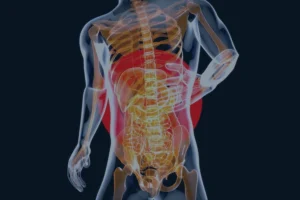

Most people assume a herniated disc has to cause back pain. But some people discover a herniated disc on an MRI even though their back feels completely normal.
Others may experience pain in the buttock, leg, calf, or foot without much discomfort in the lower back itself.
Yes, you can have a herniated disc without back pain. Some herniated discs cause no symptoms, while others primarily irritate a spinal nerve and cause leg pain, numbness, tingling, or weakness instead of pain directly in the lower back.
The symptoms depend on where the disc is located, whether a nearby nerve is affected, and how significantly that nerve is irritated or compressed.
If leg pain, numbness, tingling, or weakness is occurring without an obvious source of back pain, pain management treatments in New Jersey may begin with determining whether a spinal nerve or another structure is involved.
Can You Have a Herniated Disc Without Back Pain?
Yes.
There are two common possibilities.
A herniated disc may be present without causing any noticeable symptoms.
In other cases, the disc may irritate a spinal nerve and cause symptoms farther away from the spine without producing significant pain in the back itself.
Symptoms can depend on:
- Where the disc is located
- Whether it contacts a nearby nerve
- Which nerve is involved
- How much that nerve is affected
This is why two people with similar MRI findings may experience very different symptoms.
Why Would a Herniated Disc Not Cause Back Pain?
A herniated disc occurs when material from inside a spinal disc pushes through a weakened or damaged portion of the disc.
That structural change does not automatically mean the person will feel pain directly in the back.
The Disc May Not Be Irritating a Nerve
Some disc herniations do not significantly affect nearby nerves or other pain sensitive structures.
A person may therefore have a herniated disc without realizing it.
In some cases, the disc is only discovered because imaging was performed for another reason.
The Nerve Symptoms May Be Felt Somewhere Else
If the herniated disc irritates a spinal nerve root, symptoms may follow that nerve away from the spine.
Depending on the nerve involved, symptoms may be felt in the:
- Buttock
- Thigh
- Calf
- Foot
- Toes
The lower back itself may feel relatively normal even though the nerve traveling into the leg is producing noticeable symptoms.
Can a Herniated Disc Cause Leg Pain Without Back Pain?
Yes.
A lumbar herniated disc can irritate nerves that travel from the lower spine into the legs.
This may cause:
- Sharp leg pain
- Burning pain
- Buttock pain
- Calf pain
- Foot pain
- Tingling
- Numbness
- Weakness
For some patients, leg symptoms are much more noticeable than anything happening in the lower back.
Why Leg Pain Can Be Stronger Than Back Pain
The irritated nerve may be the structure producing the strongest symptoms.
Pain from a nerve can travel along the pathway that nerve serves rather than remaining close to the location where the nerve originates.
That means a problem in the lumbar spine can sometimes be felt primarily in the buttock, calf, foot, or toes.
The location of the pain can therefore provide important clues about which nerve may be involved.
Can You Have Sciatica Without Back Pain?
Yes.
Sciatica does not require significant lower back pain.
Sciatica refers to symptoms involving irritation of nerve roots that contribute to the sciatic nerve.
A herniated disc is one possible cause.
Someone with sciatica may primarily experience:
- Buttock pain
- Pain down one leg
- Calf pain
- Foot pain
- Tingling
- Numbness
while having little or no noticeable pain in the lower back.
This is why pain traveling down the leg can still be related to the spine even if the back itself does not hurt.
Our guide to what sciatica feels like explains these symptom patterns in more detail.
Can a Herniated Disc Cause Numbness Without Pain?
Yes.
Pain is only one possible symptom of an irritated spinal nerve.
A herniated disc can sometimes cause:
- Numbness
- Tingling
- Pins and needles
- Altered sensation
without causing significant pain.
The Location of Numbness Can Matter
Different spinal nerve roots contribute sensation to different areas of the body.
For example, numbness affecting certain parts of the foot or leg may provide clues about which lumbar nerve root is involved.
Doctors may consider these sensory patterns alongside strength, reflexes, pain location, and imaging findings.
Our guide to dermatomes explains how spinal nerve roots relate to patterns of sensation throughout the body.
Can a Herniated Disc Cause Weakness Without Back Pain?
Yes.
Spinal nerves do more than transmit pain and sensation. They also help control muscle movement.
If a herniated disc significantly affects a nerve root responsible for motor function, weakness may occur even when lower back pain is minimal.
Possible signs include:
- Difficulty lifting the foot
- Trouble lifting the big toe
- Leg weakness
- Difficulty pushing through the foot
- Changes in walking
- Feeling like the leg may give way
Weakness is an especially important symptom because it can indicate that nerve function is being affected.
Can You Have a Herniated Disc With No Symptoms at All?
Yes.
Some people have herniated discs and experience no symptoms whatsoever.
That means no:
- Back pain
- Leg pain
- Numbness
- Tingling
- Weakness
The disc may only be discovered on an MRI or another imaging study.
This is one reason imaging findings need to be interpreted carefully.
An MRI Finding Is Not Automatically the Cause of Symptoms
Seeing a herniated disc on an MRI does not automatically prove that it is responsible for a patient’s pain.
Doctors generally want the imaging findings to match the clinical picture.
That means comparing the MRI with:
- The person’s symptoms
- Where pain or numbness occurs
- Strength findings
- Reflexes
- The neurological examination
- The nerve pattern involved
A disc abnormality that does not match the patient’s symptoms may not be the primary pain source.
How Do Doctors Know If a Herniated Disc Is Causing Symptoms?
Doctors usually combine the patient’s symptoms, physical examination, neurological findings, and imaging when necessary.
An MRI alone does not always provide the complete answer.
Symptom Pattern
A physician may ask:
- Where does the pain travel?
- Is there numbness or tingling?
- Is one leg weaker?
- Do symptoms affect the foot or toes?
- What movements make symptoms worse?
- Does coughing or sneezing aggravate the symptoms?
The distribution of pain and other symptoms can help narrow down which nerve may be involved.
Neurological Examination
The examination may include checking:
- Muscle strength
- Reflexes
- Sensation
- Walking
- Specific movements
- Leg raising tests
These findings can help determine whether a nerve root appears to be affected.
Imaging When Appropriate
MRI may help show:
- Where the herniated disc is located
- Whether a nerve root is being compressed
- Which nerve may be involved
- Other spinal changes
The most useful diagnosis usually comes from matching the imaging to what the patient is actually experiencing.
Does a Herniated Disc Always Need Treatment If It Does Not Hurt?
Not necessarily.
A herniated disc that causes no symptoms may not require the same approach as one causing significant pain, numbness, or weakness.
Treatment decisions are usually based more on:
- Symptoms
- Neurological findings
- Functional limitations
- Whether symptoms are worsening
- How long the problem has been present
rather than the MRI finding alone.
This is why treating the scan instead of treating the patient can be misleading.
What If You Have Leg Symptoms but No Back Pain?
Leg symptoms without back pain can have several possible causes.
A herniated disc is one possibility, but others may include:
- Spinal stenosis
- Peripheral nerve problems
- Other forms of nerve compression
- Musculoskeletal conditions
The type of symptom matters.
Pain traveling down the leg may suggest something different from isolated numbness, burning feet, calf pain, or generalized weakness.
That is why persistent symptoms should be evaluated rather than assuming they are automatically caused by a herniated disc.
When Should Symptoms Be Evaluated?
Consider medical evaluation when:
- Leg pain persists
- Symptoms repeatedly return
- Numbness does not improve
- Tingling becomes more frequent
- Walking becomes difficult
- Weakness develops
- One leg begins giving way
- Symptoms interfere with normal activity
When Neurological Symptoms Need Prompt Attention
Seek prompt medical care for symptoms such as:
- Significant or worsening weakness
- Difficulty standing or walking
- New bowel or bladder problems
- Numbness around the saddle area
- Rapidly progressing neurological symptoms
These symptoms may indicate more significant nerve involvement and should not be ignored.
How Are Symptomatic Herniated Discs Treated?
Treatment depends on the patient’s symptoms and how significantly the affected nerve or spinal structure is interfering with normal function.
Depending on the situation, treatment may include:
- Activity modification
- Physical therapy
- Medication
- Epidural injections
- Other pain management approaches
- Surgical evaluation in certain cases
Not every herniated disc requires the same treatment.
Treatment should be based on the symptoms and clinical findings, not simply the presence of a herniated disc on an MRI.
A Herniated Disc Does Not Always Cause Back Pain
You can have a herniated disc without experiencing back pain.
Some people have no symptoms whatsoever.
Others primarily experience leg pain, numbness, tingling, or weakness because the disc is irritating a spinal nerve.
The absence of lower back pain therefore does not completely rule out a spinal disc problem.
At the same time, finding a herniated disc on an MRI does not automatically mean that disc is responsible for the symptoms.
The location of the herniation should make sense alongside the patient’s symptom pattern, neurological examination, and other clinical findings.
If persistent leg pain, numbness, tingling, or weakness is affecting movement or everyday activities, exploring pain treatment services in New Jersey can help determine whether a herniated disc, irritated nerve, or another condition may be contributing to your symptoms.