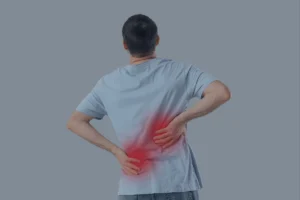
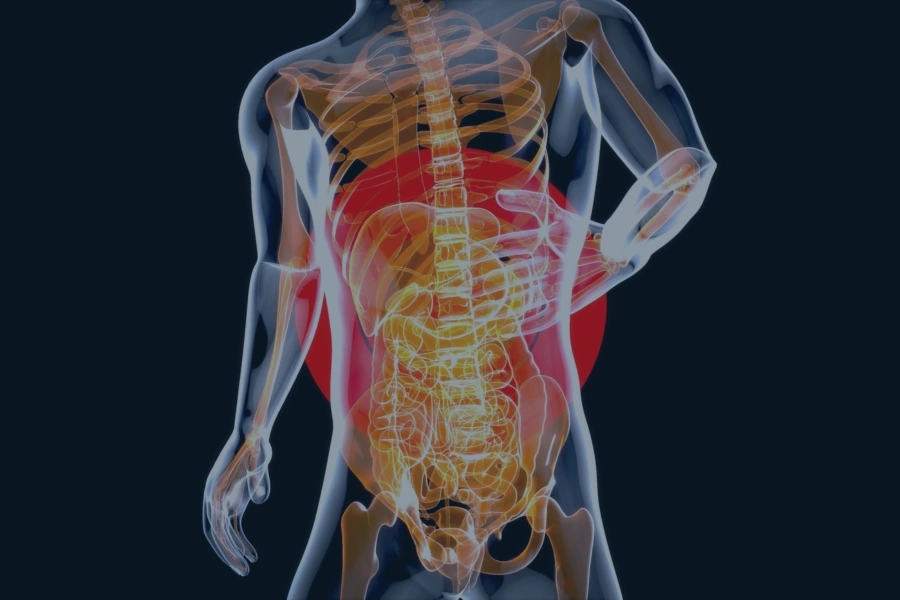
Back pain can come from several different structures, including muscles, joints, nerves, and the discs between the bones of the spine.
Discogenic back pain is pain that originates from one or more intervertebral discs in the spine.
That does not automatically mean someone has a herniated disc or a pinched nerve. A spinal disc can become painful without pressing on a nerve, and visible disc changes do not always cause symptoms.
Because different spinal problems can feel similar, identifying the source of the pain is important before deciding on treatment. Patients dealing with persistent symptoms can explore pain management treatments in New Jersey based on the cause and severity of their pain.
Discogenic Back Pain: Quick Answer
Discogenic back pain is pain that begins within a spinal disc.
The discs sit between the vertebrae and help absorb pressure while allowing the spine to move. Over time, a disc may lose hydration, become less flexible, develop small tears, or experience other structural changes.
When those changes become painful, the discomfort is described as discogenic pain.
It most commonly affects the lower back, although pain may sometimes spread into the buttocks, hips, or nearby areas.
| Condition | Main Problem |
| Discogenic back pain | Pain originates from the spinal disc |
| Herniated disc | Disc material moves beyond its normal boundary |
| Pinched nerve | A nerve becomes compressed or irritated |
| Facet joint pain | Pain comes from the small joints of the spine |
These conditions can overlap, which is one reason diagnosing back pain is not always as simple as identifying one abnormality on an MRI.
What Causes Discogenic Back Pain?
Spinal discs naturally change over time.
Some of those changes are part of normal aging and never cause symptoms. In other cases, changes within the disc may contribute to persistent back pain.
Disc Degeneration
Spinal discs contain a significant amount of water when they are healthy.
As the discs age, they may gradually lose hydration and flexibility. This can reduce their ability to absorb pressure and may change how force moves through the spine.
A degenerating disc does not automatically cause pain. Many people have degenerative changes without noticeable symptoms.
However, in some patients, those changes may contribute to irritation within the disc and ongoing discomfort.
Annular Tears
The outer portion of a spinal disc is called the annulus.
Small tears or fissures can develop in this outer layer. These changes may occur gradually or develop after stress or injury.
Some annular tears cause no symptoms. Others may contribute to pain, particularly when sensitive structures within or around the disc become irritated.
Repetitive Stress or Injury
Repeated loading of the spine may also contribute to disc problems.
Examples include:
- Frequent heavy lifting
- Repetitive bending
- Twisting movements
- High impact activity
- Previous back injuries
A single injury can sometimes contribute, but discogenic pain may also develop gradually after years of repeated stress.
The important point is that structural changes alone do not confirm the source of pain. Doctors still need to determine whether those changes actually match the patient’s symptoms.
What Does Discogenic Back Pain Feel Like?
Discogenic back pain is often described as a deep ache centered in the lower back.
Symptoms can vary, but common patterns may include:
- Deep or aching lower back pain
- Pain that becomes worse after prolonged sitting
- Pain with bending
- Pain when lifting
- Pain during certain movements
- Discomfort spreading into the buttocks or hips
- Symptoms that improve after changing positions
Sitting can be particularly uncomfortable for some people because certain positions increase pressure on the spinal discs.
Bending forward, lifting from the floor, or repeatedly flexing the lower back may also aggravate symptoms.
Discogenic pain is typically more centered around the spine than classic nerve pain.
If pain is accompanied by numbness, tingling, burning, weakness, or shooting pain traveling far down the leg, a nerve may also be involved.
Discogenic Back Pain vs Herniated Disc Pain
Discogenic back pain and a herniated disc are related concepts, but they do not mean the same thing.
Discogenic pain describes where the pain originates.
A herniated disc describes a structural change within the disc.
A disc can be painful without being herniated.
Likewise, someone may have a herniated disc visible on imaging without experiencing any significant pain.
A herniated disc may also produce different types of symptoms depending on what structures it affects.
If the disc itself is painful, the person may experience discogenic back pain.
If the herniated material presses against a nearby nerve, the person may develop radiating pain, numbness, tingling, or weakness.
Some people can experience both at the same time.
You can learn more about how disc herniations can affect the spine and nearby nerves.
Discogenic Back Pain vs Nerve Pain
Discogenic back pain is generally more localized than nerve pain.
Discogenic Pain
Discogenic pain is more likely to feel:
- Deep
- Aching
- Centered in the back
- Worse with certain positions
- Worse with bending, sitting, or lifting
The pain may spread into the buttocks or hips, but it does not necessarily follow the path of a nerve.
Nerve Pain
Nerve pain is more likely to involve:
- Shooting pain
- Burning
- Electrical sensations
- Tingling
- Numbness
- Pain traveling into the leg or foot
For example, a compressed nerve in the lower back may cause symptoms that travel well beyond the spine.
Pain location and sensation can provide useful clues, but they do not confirm the diagnosis by themselves. Different spinal conditions can produce overlapping symptoms.
How Doctors Diagnose Discogenic Back Pain
Diagnosing discogenic back pain can be more complicated than finding an abnormal disc on an imaging study.
Many adults have disc degeneration or other spinal changes without experiencing significant pain.
Doctors therefore look at the entire clinical picture.
Medical History
The evaluation often starts with questions about how the pain behaves.
A doctor may ask:
- Where the pain begins
- Whether it travels
- Which movements make it worse
- Whether sitting aggravates symptoms
- How long the pain has been present
- Whether the pain keeps returning
- Whether numbness or weakness is present
- Whether there has been a previous injury
These patterns can help determine whether the pain appears to be coming from the disc, a nerve, a joint, or another structure.
Physical Examination
A physical examination may evaluate:
- Range of motion
- Pain with certain movements
- Strength
- Sensation
- Reflexes
- Tenderness
- Overall movement patterns
Doctors may also look for signs that point toward nerve compression or another source of back pain.
Imaging
MRI imaging may help identify structural changes within the spine.
Possible findings include:
- Disc degeneration
- Annular tears
- Disc herniations
- Loss of disc height
- Other spinal changes
However, disc abnormalities on imaging do not automatically prove that the disc is causing the pain.
An MRI finding needs to make sense when compared with the person’s symptoms, examination, and overall pain pattern.
That distinction is important because treating an abnormal image rather than the true pain source may not improve the symptoms.
Treatment for Discogenic Back Pain
Treatment depends on the severity of the pain, how long it has been present, and what is believed to be causing it.
Most patients do not automatically need surgery.
Conservative Treatment
Initial treatment may include:
- Activity modification
- Physical therapy
- Exercise and rehabilitation
- Medication when appropriate
Activity modification may involve temporarily reducing movements that repeatedly aggravate the back.
Physical therapy and exercise may focus on improving strength, mobility, stability, and movement patterns.
Medication may also be considered to help control pain or inflammation depending on the patient’s overall condition.
Interventional Pain Management
If symptoms continue despite conservative care, interventional pain management may be considered.
The right procedure depends on the pain generator.
Certain injections or other treatments may be useful when inflammation, nerve irritation, or another specific spinal structure is contributing to the pain.
You can review the available pain treatments used for different chronic pain conditions.
The goal is not simply to perform a procedure because a disc abnormality appears on an MRI. Treatment should match the actual source of the symptoms.
When Surgery May Be Considered
Discogenic back pain does not automatically require surgery.
Surgical evaluation may be considered in certain cases when significant structural problems are present or when persistent symptoms have not improved with appropriate nonsurgical care.
The decision depends on the diagnosis, severity of symptoms, overall spinal condition, and how much the pain is affecting daily function.
When to See a Pain Management Doctor
Occasional back pain may improve with rest, activity changes, or conservative care.
An evaluation becomes more important when symptoms continue or repeatedly return.
Consider seeing a pain management doctor if:
- Back pain lasts several weeks
- Pain keeps coming back
- Sitting consistently makes symptoms worse
- Bending or lifting regularly triggers pain
- Pain interferes with work
- Pain affects sleep
- Daily activities become difficult
- Conservative treatment has not provided enough relief
- Numbness, tingling, or weakness develops
Persistent symptoms do not always mean there is a serious spinal problem, but they may signal that the source of the pain needs a closer evaluation.
Patients can also learn more about the causes and treatment of persistent back pain.
Frequently Asked Questions About Discogenic Back Pain
Is discogenic back pain the same as degenerative disc disease?
No.
Degenerative disc disease describes structural changes that occur within spinal discs over time.
Discogenic back pain specifically means that a spinal disc is believed to be generating pain.
A person can have degenerative disc changes without experiencing discogenic pain.
Can you have discogenic pain without a herniated disc?
Yes.
A spinal disc can become painful without herniating.
Degeneration, annular tears, and other internal changes may contribute to discogenic pain even when disc material has not significantly moved beyond its normal position.
Can discogenic back pain cause leg pain?
It can sometimes cause pain that spreads into the buttocks, hips, or upper portions of the legs.
Pain that shoots farther down the leg, especially when combined with tingling, numbness, or weakness, may suggest nerve involvement.
Does discogenic back pain show up on an MRI?
An MRI may show disc abnormalities that could be associated with discogenic pain.
However, imaging alone cannot always determine whether a particular disc is actually causing symptoms.
Doctors compare MRI findings with the patient’s pain pattern, history, and examination.
Can discogenic back pain heal?
Symptoms may improve depending on the cause, severity, and treatment response.
Some patients improve with activity changes, rehabilitation, and other nonsurgical treatments.
The underlying structural disc changes may still remain visible even when pain improves.
Is discogenic back pain permanent?
Not necessarily.
Some people experience temporary or intermittent symptoms, while others develop persistent chronic pain.
The outlook depends on the condition of the disc, overall spine health, contributing factors, and response to treatment.
Getting to the Source of Discogenic Back Pain
Discogenic back pain is one possible source of persistent back pain, but spinal discs are only part of the picture.
Pain may also come from nerves, joints, muscles, or several structures at the same time. Even when an MRI shows disc degeneration or another abnormality, that finding does not automatically prove where the pain is coming from.
A proper evaluation helps determine whether symptoms are truly discogenic and which treatment approach makes the most sense.
If ongoing back pain is interfering with your daily life, the Center for Regenerative Therapy & Pain Management provides pain management in New Jersey based on the individual source and pattern of each patient’s pain.
Schedule a consultation to discuss persistent back pain and available treatment options.