SI joint pain and facet joint pain can both cause persistent discomfort in the lower back, but they come from different joints.
SI joint pain comes from the sacroiliac joints where the spine meets the pelvis, while facet joint pain comes from the small joints connecting the vertebrae.
Because both conditions can cause lower back pain, buttock pain, stiffness, and discomfort with movement, it is not always easy to tell them apart based on symptoms alone.
The location of the pain and the movements that trigger it can provide useful clues. For people dealing with ongoing symptoms, exploring pain management treatments in New Jersey can help determine which treatment options may fit the actual source of the pain.
SI Joint Pain vs Facet Joint Pain: Quick Answer
The biggest difference is the joint causing the pain.
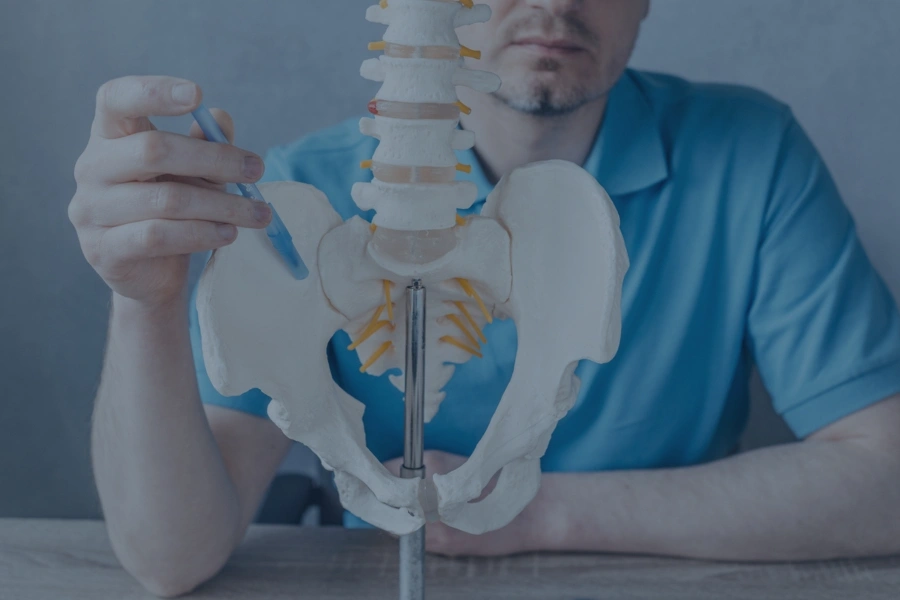
The sacroiliac joints sit at the bottom of the spine where the sacrum connects to the pelvis.
Facet joints are smaller joints located between the vertebrae throughout the spine.
| Feature | SI Joint Pain | Facet Joint Pain |
| Pain source | Sacroiliac joint | Spinal facet joint |
| Common location | Low back, buttock, pelvis | Low back or neck |
| Often one sided | Yes | Can be |
| Pain into buttock | Common | Possible |
| Pain with extension | Possible | Common |
| Pain with standing or walking | Possible | Common |
| Numbness or tingling | Less typical | Less typical unless nerves are also involved |
Neither condition is primarily a nerve disorder.
If numbness, tingling, burning, or shooting pain travels far down the leg, another problem involving a spinal nerve may also be present.
What Is SI Joint Pain?
The sacroiliac joints, often called SI joints, connect the sacrum at the bottom of the spine to the pelvis.
There is one SI joint on each side of the body.
These joints help transfer force between the upper body and the legs while providing a combination of stability and limited movement.
When an SI joint becomes irritated or moves abnormally, it can become a source of lower back and pelvic pain.
Common SI Joint Pain Symptoms
SI joint symptoms may include:
- Lower back pain
- Buttock pain
- Pain near one side of the pelvis
- Pain when standing up from a chair
- Pain while walking
- Discomfort when climbing stairs
- Pain when standing on one leg
- Discomfort when lying on the affected side
The pain is often more noticeable on one side, although both SI joints can potentially be involved.
What Is Facet Joint Pain?
Facet joints are small joints located along the back of the spine.
They connect adjacent vertebrae and help guide movement while preventing excessive motion.
Like other joints in the body, facet joints can become irritated, arthritic, or degenerative over time.
When this happens, they may become a source of persistent spinal pain.
You can learn more about the symptoms and causes of facet joint pain.
Common Facet Joint Pain Symptoms
Facet joint symptoms may include:
- Localized lower back pain
- Pain on one or both sides of the spine
- Pain when bending backward
- Pain with twisting
- Spinal stiffness
- Pain after prolonged standing
- Discomfort spreading into the buttocks
- Pain extending into the upper thighs
Facet pain is often described as a deep ache or stiffness rather than a burning or electrical sensation.
Where Does SI Joint Pain Usually Hurt?
SI joint pain is often felt very low in the back, near the point where the spine meets the pelvis.
People may feel discomfort around:
- One side of the lower back
- The buttock
- The back of the pelvis
- The hip region
- The upper thigh
Someone with SI joint pain may be able to point to a fairly specific area near one side of the pelvis.
The discomfort can sometimes be mistaken for hip pain because of how close the SI joint is to the hip and buttock.
SI joint pain also tends to sit lower than many types of lumbar facet pain.
Where Does Facet Joint Pain Usually Hurt?
Lumbar facet joint pain is usually felt closer to the spine.
The discomfort may occur:
- Directly along the lower back
- Slightly to one side of the spine
- On both sides of the lower back
- Into the buttocks
- Into the upper thighs
Facet joint pain generally stays relatively close to the spine.
Pain that shoots farther down the leg, particularly when accompanied by numbness or tingling, may suggest that a spinal nerve is also being irritated or compressed.
Which Movements Make the Pain Worse?
How symptoms respond to movement can help narrow down the possible source.
However, movement patterns are only clues. They do not confirm whether the SI joint or facet joints are responsible.
Movements That May Aggravate SI Joint Pain
SI joint symptoms may become more noticeable during activities that place uneven force through the pelvis.
Examples include:
- Standing up from a chair
- Walking
- Climbing stairs
- Standing on one leg
- Rolling over in bed
- Prolonged standing
- Getting in or out of a car
Some people also notice symptoms when their weight shifts primarily onto one side of the body.
Movements That May Aggravate Facet Joint Pain
Facet joint pain commonly becomes worse during movements that compress or load the joints along the back of the spine.
Examples include:
- Bending backward
- Twisting
- Standing for long periods
- Rotational movements
- Repeated spinal extension
Someone may notice that leaning backward produces more discomfort than bending forward.
Again, these patterns help guide the evaluation, but they are not enough to diagnose the problem on their own.
Can SI Joint Pain and Facet Joint Pain Feel the Same?
Yes.
There is considerable overlap between the two.
Both conditions can cause:
- Lower back pain
- Buttock pain
- Stiffness
- Pain with movement
- Discomfort while standing
- Pain while walking
- Difficulty finding a comfortable position
That overlap is one reason self diagnosis can be difficult.
Someone may assume pain near the buttock comes from the SI joint when it is actually coming from a lumbar facet joint. The opposite can also happen.
It is also possible to have more than one pain source at the same time.
For example, someone may have degenerative changes affecting the lumbar facet joints while also experiencing irritation around an SI joint.
How Doctors Tell the Difference
Doctors usually look at the overall pattern rather than relying on one symptom.
The goal is to determine which structure best explains the patient’s pain.
Medical History
The evaluation often begins by discussing:
- Where the pain starts
- Whether it occurs on one side or both
- Whether the pain travels
- Which movements trigger symptoms
- How long the pain has been present
- Whether there has been a previous injury
- Which activities make symptoms better or worse
The exact pain location can be especially useful when comparing SI joint pain with facet joint pain.
Physical Examination
A physical examination may evaluate:
- Spinal range of motion
- Hip and pelvic movement
- Tenderness
- Pain during specific movements
- Strength
- Sensation
- Reflexes
Doctors may also use certain SI joint provocation maneuvers designed to place controlled stress on the joint and see whether they reproduce the patient’s familiar pain.
Spinal movements may be used to evaluate whether the facet joints are more likely to be involved.
A neurological examination can also help identify whether a nerve problem may be contributing to the symptoms.
Imaging and Diagnostic Injections
Imaging may be useful for identifying arthritis, degeneration, disc problems, or other structural changes.
However, an abnormality on imaging does not automatically prove that it is causing the pain.
Many people have structural changes in the spine without significant symptoms.
Diagnostic injections may sometimes provide additional information when the pain source remains unclear.
For suspected facet joint pain, procedures such as medial branch blocks can help determine whether the nerves carrying pain signals from the facet joints are involved.
The response to a targeted injection can give the physician more information about which structure is actually generating the pain.
Treatment for SI Joint Pain vs Facet Joint Pain
Treatment depends on which joint is causing the symptoms and how severe the problem has become.
Many patients begin with conservative treatment before interventional procedures are considered.
SI Joint Pain Treatment
Possible treatment options may include:
- Activity modification
- Physical therapy
- Exercise and rehabilitation
- Medication when appropriate
- Targeted injections
- Other interventional treatments depending on the diagnosis
Physical therapy may focus on strength, mobility, pelvic stability, and movement patterns.
The appropriate plan depends on what is contributing to the SI joint symptoms.
Facet Joint Pain Treatment
Facet related pain may be treated with:
- Activity modification
- Physical therapy
- Medication
- Facet related injections
- Medial branch blocks
- Radiofrequency ablation when appropriate
Medial branch blocks may help determine whether the facet joints are contributing to the pain.
If selected medial branch nerves are confirmed as a significant pain source, radiofrequency ablation may sometimes be considered as a longer lasting treatment option.
The important point is that the right treatment depends on which joint is actually generating the pain.
Treating suspected facet pain when the SI joint is actually responsible, or vice versa, may not adequately address the symptoms.
When to See a Pain Management Doctor
Lower back discomfort does not always require specialist treatment.
An evaluation becomes more useful when symptoms persist, repeatedly return, or begin interfering with everyday life.
Consider seeing a pain management doctor if:
- Lower back pain lasts several weeks
- Pain keeps returning
- Standing consistently triggers symptoms
- Walking becomes uncomfortable
- Twisting or bending regularly causes pain
- Pain interferes with sleep
- Work or normal activities become difficult
- Conservative treatment has not helped enough
- It is unclear whether the pain is coming from the SI joint, facet joints, discs, or nerves
Persistent symptoms can have several possible causes.
You can learn more about conditions associated with ongoing back pain and how they may be evaluated.
Frequently Asked Questions About SI Joint and Facet Joint Pain
Is SI joint pain the same as facet joint pain?
No.
SI joint pain comes from the sacroiliac joints that connect the sacrum to the pelvis.
Facet joint pain comes from the smaller joints connecting the vertebrae of the spine.
They can cause similar symptoms, but they involve different structures.
Where is SI joint pain usually felt?
SI joint pain is usually felt near the bottom of the lower back and around one side of the pelvis or buttock.
Some people also feel discomfort around the hip or upper thigh.
Where is facet joint pain usually felt?
Lumbar facet joint pain is commonly felt along or slightly to the side of the lower spine.
It may also spread into the buttocks or upper thighs.
Can SI joint pain spread into the leg?
Yes, SI joint pain can sometimes spread into the buttock or upper leg.
Pain traveling farther down the leg with numbness, tingling, or electrical sensations may suggest that a nerve is also involved.
Can facet joint pain cause buttock pain?
Yes.
Lumbar facet joint pain can spread from the lower back into the buttock and sometimes the upper thigh.
It generally does not follow the same pattern as classic radiating nerve pain.
Can you have SI joint pain and facet joint pain at the same time?
Yes.
More than one structure can contribute to lower back pain.
Someone may have SI joint irritation along with arthritis or degeneration affecting the lumbar facet joints.
How do doctors know which joint is causing the pain?
Doctors consider the location and pattern of the pain, movements that trigger symptoms, physical examination findings, imaging when appropriate, and sometimes targeted diagnostic injections.
The goal is to identify which structure best matches the patient’s symptoms before choosing treatment.
Identifying the Source of Lower Back Pain
SI joint pain and facet joint pain can look similar because both can cause lower back discomfort, buttock pain, stiffness, and pain with movement.
The difference is where that pain originates.
SI joint pain involves the joints connecting the spine and pelvis, while facet joint pain comes from the small joints along the spine.
Identifying the correct pain source helps determine whether treatment should focus on the SI joint, facet joints, nerves, discs, or another structure.
If persistent lower back pain is affecting your everyday life, the Center for Regenerative Therapy & Pain Management provides pain management in New Jersey based on each patient’s symptoms and underlying diagnosis.
Schedule a consultation to discuss persistent lower back pain and available treatment options.