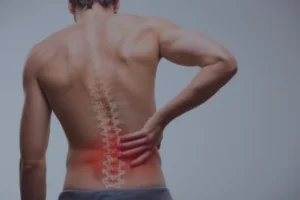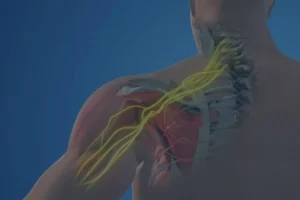

Sometimes chronic pain persists even when doctors cannot identify enough tissue damage or nerve injury to fully explain the symptoms.
That does not mean there is no biological explanation for the pain.
Nociplastic pain is pain associated with altered pain processing when the symptoms cannot be fully explained by tissue damage or a disease or lesion of the somatosensory nervous system.
It is now recognized alongside nociceptive pain and neuropathic pain as one of the major ways pain can develop. The term has also become more established in medical literature in recent years.
When chronic pain continues without one clear structural explanation, understanding the underlying pain mechanism can help guide appropriate pain treatments in New Jersey.
What is Nociplastic Pain?
Nociplastic pain occurs when the body’s pain processing becomes altered in a way that produces persistent or amplified pain, even though tissue damage or nerve injury does not fully explain the symptoms.
One important distinction is that nociplastic pain is a pain mechanism or clinical descriptor, not a standalone diagnosis.
In other words, the term describes how pain may be developing rather than naming one specific disease.
What Does Altered Nociception Mean?
Nociception is the nervous system’s process for detecting potentially harmful stimuli and sending signals that may contribute to pain.
Normally, this system helps alert the body when tissue is injured or threatened.
With nociplastic pain, that processing appears to become altered. The nervous system may become more responsive to sensory input, making certain sensations feel more painful than expected.
This does not necessarily mean there is ongoing tissue damage.
What Are the Three Main Pain Mechanisms?
Understanding nociplastic pain is easier when it is compared with the other two major pain mechanisms.
Nociceptive Pain
Nociceptive pain is primarily caused by actual or threatened tissue damage.
Examples may include:
- A muscle strain
- Joint inflammation
- An injury
- Tissue damage
This is the type of pain people often think about when something is physically injured or inflamed.
Neuropathic Pain
Neuropathic pain is caused by a lesion or disease affecting the somatosensory nervous system.
It may feel:
- Burning
- Shooting
- Electric
- Tingling
- Stabbing
- Numb
Sciatica, radiculopathy, and some forms of peripheral neuropathy can involve neuropathic pain.
Nociplastic Pain
Nociplastic pain involves altered nociception when tissue injury or nerve disease does not adequately explain the symptoms.
The pain is still real, but the mechanism is different.
Pain Mechanisms Can Overlap
A person does not always fit perfectly into one category.
Someone may have:
- Nociceptive pain
- Neuropathic pain
- Nociplastic pain
- A combination of two or more mechanisms
For example, someone with arthritis may have pain from an irritated joint while also developing increased pain sensitivity over time.
Understanding this overlap can be important because chronic pain is not always caused by one single process.
What Does Nociplastic Pain Feel Like?
There is no single sensation that only occurs with nociplastic pain.
The symptoms can vary significantly from one person to another.
Possible features may include:
- Persistent pain
- Pain affecting several areas
- Pain that becomes more widespread over time
- Increased sensitivity to pressure
- Increased sensitivity to touch
- Pain triggered by movements that would normally cause little discomfort
Some people may also experience fatigue, poor sleep, or difficulty concentrating alongside persistent pain.
Pain Hypersensitivity May Be an Important Clue
Two terms that sometimes come up when discussing nociplastic pain are hyperalgesia and allodynia.
- Hyperalgesia means a painful stimulus causes more pain than would normally be expected.
- For example, pressure that would usually feel mildly uncomfortable may feel extremely painful.
- Allodynia means something that is normally not painful causes pain.
- A light touch from clothing or a bedsheet may feel uncomfortable or painful.
These symptoms can occur with nociplastic pain, although they are not specific to it and can appear in other pain conditions as well.
What Conditions Can Involve Nociplastic Pain?
Fibromyalgia is one of the most commonly discussed examples of a condition associated with nociplastic pain.
Nociplastic mechanisms may also contribute to some cases of:
- Chronic musculoskeletal pain
- Chronic headache disorders
- Temporomandibular disorders
- Irritable bowel syndrome
- Other persistent pain conditions
It is important not to assume that every person with one of these conditions automatically has nociplastic pain.
The way pain develops can vary between patients.
Nociplastic Pain Can Exist Alongside Other Pain
Pain mechanisms are not mutually exclusive.
Someone with arthritis may have nociceptive pain caused by joint inflammation while also developing nociplastic features.
Someone with a nerve injury may experience neuropathic pain along with increased pain sensitivity.
That is why doctors often look at the entire symptom pattern rather than assuming one mechanism explains everything.
Is Nociplastic Pain the Same as Central Sensitization?
No.
The terms are related, but they are not interchangeable.
Central Sensitization Is a Mechanism
Central sensitization refers to increased responsiveness within the central nervous system to sensory input.
The spinal cord and brain may become more reactive to signals, potentially increasing pain sensitivity.
Our guide to pain sensitization explains this process in more detail.
Nociplastic Pain Is a Clinical Pain Descriptor
Nociplastic pain describes a clinical pattern in which altered nociception appears to contribute to pain.
Central sensitization may be one process involved in nociplastic pain, but nociplastic pain should not automatically be treated as another name for central sensitization.
That distinction matters because the science behind chronic pain can involve several different mechanisms at the same time.
What Causes Nociplastic Pain?
There is no single established cause of nociplastic pain.
Research is still evolving.
Several biological processes are being studied, including:
- Increased sensitivity within pain pathways
- Altered pain modulation
- Changes in how the brain and spinal cord process sensory signals
- Changes within peripheral pain pathways
- Interactions between the nervous and immune systems
The exact combination of factors may differ from one patient to another.
It Is Not Simply Pain in Your Head
Nociplastic pain should not be interpreted as imaginary pain.
Altered pain processing involves real biological activity within the nervous system.
A person does not need to have a major injury visible on an MRI for pain to be genuine.
The absence of a large structural abnormality simply means that tissue damage alone may not fully explain what the patient is experiencing.
How is Nociplastic Pain Diagnosed?
There is currently no single MRI, blood test, or biomarker that definitively diagnoses nociplastic pain.
Instead, clinicians look at the overall pattern.
Evaluation may include:
- How long the pain has been present
- Whether pain is localized or widespread
- Sensitivity to touch or pressure
- Sensitivity to movement
- Responses to heat or cold
- Whether tissue damage adequately explains the symptoms
- Whether nerve injury adequately explains the symptoms
- Other associated symptoms
- Findings from the physical examination
Doctors may also review imaging, previous diagnoses, medical history, and how pain affects everyday function.
The goal is not simply to rule out every other possibility.
It is to understand which pain mechanisms appear most likely to be contributing.
Why Might MRI or Other Imaging Look Normal?
Imaging can be extremely useful for identifying structural problems.
An MRI may help detect:
- Disc problems
- Arthritis
- Spinal stenosis
- Tissue injuries
- Certain forms of nerve compression
However, MRI does not directly measure how the nervous system processes pain.
Someone can therefore experience significant pain even when imaging does not show enough structural damage to explain the severity or distribution of symptoms.
This is one reason a normal MRI does not automatically mean nothing is wrong.
Is Nociplastic Pain the Same as Chronic Pain?
No.
Chronic pain describes pain that persists over time.
It does not tell you what mechanism is responsible.
Chronic pain may be:
- Nociceptive
- Neuropathic
- Nociplastic
- Mixed
Not every person with chronic pain has nociplastic pain.
Likewise, nociplastic pain should not become a catchall label whenever doctors cannot immediately find a structural cause.
The entire clinical picture still matters.
How is Nociplastic Pain Treated?
Treatment is usually individualized because nociplastic pain can involve altered pain processing rather than one isolated injured structure.
Depending on the patient, management may include a combination of:
- Appropriate physical activity
- Rehabilitation
- Pain education
- Sleep management
- Lifestyle changes
- Psychological approaches used as part of multidisciplinary pain care
- Appropriate medications
- Treatment of overlapping nociceptive or neuropathic pain
The goal is often broader than treating one painful spot.
Care may focus on improving function, reducing pain sensitivity, restoring activity, improving sleep, and addressing other contributing pain mechanisms.
Treatment Depends on the Entire Pain Picture
Someone can have nociplastic features while also having a herniated disc, arthritis, nerve irritation, or another painful condition.
Those problems may still require their own treatment.
For example, a person could have nerve related leg pain that benefits from a targeted treatment while also having broader pain sensitivity that requires a different approach.
This is why identifying all of the contributing mechanisms matters.
Why Does Identifying the Pain Mechanism Matter?
Different pain mechanisms may respond differently to treatment.
If care focuses only on one structural finding, it may not fully address the patient’s symptoms when altered pain processing is also involved.
Doctors may consider whether pain appears predominantly:
- Nociceptive
- Neuropathic
- Nociplastic
- Mixed
That does not mean every patient can be placed neatly into one category.
Pain can be complex, and the dominant mechanism may even change over time.
The goal is to understand the overall pattern well enough to guide appropriate treatment.
When Should Persistent Pain Be Evaluated?
Consider medical evaluation when pain:
- Persists for months
- Becomes more widespread
- Feels unusually sensitive to touch
- Feels unusually sensitive to movement
- Interferes with sleep
- Limits everyday activities
- Does not improve as expected
- Does not appear to match previous imaging findings
- Occurs alongside persistent fatigue or other symptoms
Persistent pain does not automatically mean nociplastic pain is present.
A proper evaluation is still important to identify possible injuries, nerve problems, inflammatory conditions, and other causes.
New or worsening weakness, major trauma, fever with significant pain, or bowel and bladder changes should receive prompt medical evaluation rather than being assumed to be part of nociplastic pain.
Nociplastic Pain is a Different Way Pain Can Develop
Nociplastic pain describes pain associated with altered nociception when tissue damage or nerve injury does not adequately explain the symptoms.
It is recognized alongside nociceptive and neuropathic pain as an important pain mechanism, but it is not a standalone diagnosis, it is not the same thing as central sensitization, and it should not simply be used as another name for unexplained pain.
More than one pain mechanism can also occur at the same time.
That is why chronic pain evaluation often requires looking at the symptoms, physical examination, imaging, neurological findings, function, and the overall pattern rather than relying on one test alone.
If persistent pain is interfering with everyday life and the source remains difficult to explain, pain management services in New Jersey can help evaluate the symptoms, possible pain mechanisms, and appropriate next steps.