
Sciatica vs. herniated discs are often confused, but they are not the same condition — and understanding the difference is key to getting the right treatment. Many people are told they “have sciatica” when what’s actually happening is a structural problem in the spine, such as a herniated disc. In simple terms, sciatica describes how pain feels, while a herniated disc explains why it’s happening.
In this guide, you’ll learn how sciatica and herniated discs differ, how their symptoms behave, and when it’s time to stop guessing and seek proper medical evaluation instead of relying on self-diagnosis.
Understanding the Basics — Sciatica vs. Herniated Disc
Sciatica is a set of symptoms caused by irritation of the sciatic nerve, while a herniated disc is a physical injury to one of the spine’s discs. A herniated disc can cause sciatica, but sciatica can also come from other issues like spinal stenosis or muscle compression. Because symptoms overlap, it’s difficult to accurately diagnose yourself without a clinical exam and imaging when needed.
What is Sciatica?
What Happens in the Body
Sciatica occurs when the sciatic nerve becomes compressed or irritated. This nerve runs from the lower back through the hips and down each leg. Common sources of irritation include herniated discs, spinal stenosis, and tight muscles such as the piriformis.
Common Sciatica Symptoms
Sciatica typically causes pain that radiates down one leg rather than staying in the lower back. Many people describe the sensation as burning, electric, or shooting. Tingling, numbness, or weakness in the leg or foot can also occur.
How Sciatica Typically Behaves
Sciatic pain often worsens with sitting, standing for long periods, coughing, or bending. Symptoms may fluctuate, improving on some days and flaring on others depending on inflammation and nerve sensitivity.
What is a Herniated Disc?
Disc Anatomy Explained (Simple)
Spinal discs act as cushions between the vertebrae. Each disc has a tough outer layer (annulus) and a soft, gel-like center (nucleus). A herniated disc occurs when the inner gel pushes through a tear in the outer layer and presses on nearby nerves.
Symptoms of a Herniated Disc
A herniated disc can cause localized back or neck pain. If it compresses a nerve, symptoms may radiate into the arms or legs. Muscle weakness, reduced reflexes, and numbness are common when nerve involvement is present.
Where Herniated Discs Occur
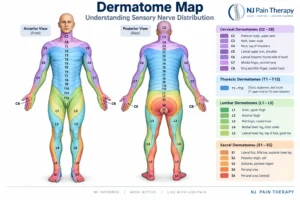
Herniated discs most often occur in the lumbar spine or cervical spine. The location determines symptoms — lumbar herniations affect the legs, while cervical herniations affect the arms. This is why symptom location provides important diagnostic clues.
Key Differences Between Sciatica and Herniated Discs
Sciatica is a symptom pattern, not a diagnosis. A herniated disc is a structural spine condition. Sciatica pain usually radiates down one leg, while herniated disc pain may stay localized or travel depending on nerve involvement. Herniated discs may worsen over time if untreated, while sciatica symptoms can fluctuate based on inflammation, posture, and activity.
Can a Herniated Disc Cause Sciatica?
Yes — a lumbar herniated disc is one of the most common causes of sciatica. When the bulging disc material presses on the sciatic nerve root, leg pain develops. However, not every herniated disc causes sciatica, and not all sciatica comes from a herniated disc. This is why imaging alone doesn’t provide the full picture and must be paired with a physical exam and symptom review.
Causes and Risk Factors for Each Condition
When comparing sciatica vs. herniated discs, the causes often overlap — but they’re not identical.
Sciatica Triggers
Sciatica is usually triggered by irritation of the sciatic nerve rather than direct disc damage. Prolonged sitting, especially with poor posture, increases pressure on the lower spine and nerves. Muscle spasms, particularly in the piriformis muscle, can compress the sciatic nerve. Inflammation around the spine or nerve roots also plays a major role, which is why symptoms often flare with inactivity, stress, or repetitive strain.
Herniated Disc Risk Factors
Herniated discs are caused by structural changes in the spine. Age-related degeneration dries out discs and makes them more prone to tearing. Improper lifting techniques, repetitive bending or twisting, and physically demanding work increase risk. Genetics can influence disc strength, and trauma such as falls, car accidents, or sports injuries can accelerate herniation.
How Doctors Diagnose Sciatica vs. Herniated Discs
Diagnosis starts with a detailed symptom history, including where pain travels, what triggers it, and how long it’s been present. A physical exam evaluates strength, sensation, reflexes, and mobility to identify nerve involvement. Imaging such as an MRI is used when symptoms persist, worsen, or show red-flag signs. Accurate diagnosis matters because treating sciatica like a disc problem — or vice versa — can delay healing and prolong pain.
Treatment Options for Sciatica
Sciatica treatment focuses on reducing nerve irritation and inflammation. Physical therapy helps correct movement patterns and relieve pressure on the sciatic nerve. Epidural steroid injections reduce inflammation around irritated nerve roots and often provide significant relief. Nerve blocks can calm overactive pain signals and clarify the source of pain. In some cases, regenerative therapies are used to support healing in joints, discs, or soft tissues contributing to nerve compression. Surgery is rarely needed and reserved for severe, progressive cases.
Treatment Options for Herniated Discs
Herniated disc treatment usually begins with conservative care, including activity modification and targeted rehabilitation. Injection-based treatments such as epidural steroid injections help reduce nerve inflammation and pain. Regenerative therapies like plasma injections (PRP) may support healing in selected cases. Surgery is considered only when conservative treatments fail or when significant weakness or neurological decline is present.
When to See a Pain Management Specialist
You should seek evaluation from a pain management specialist if pain lasts longer than one to two weeks without improvement, or if you experience radiating pain into the arms or legs. Progressive weakness, numbness, or tingling are important warning signs. Bowel or bladder changes require immediate medical attention and should never be ignored.
FAQs — Sciatica vs. Herniated Disc
Is sciatica permanent?
No. Sciatica is often temporary and improves once nerve irritation and inflammation are treated. However, if the underlying cause—such as a herniated disc or spinal stenosis—is not addressed, symptoms can become chronic.
Can a herniated disc heal on its own?
Yes, many herniated discs improve over time with conservative care. As inflammation decreases, pressure on the nerve can lessen. That said, persistent pain, weakness, or numbness should be evaluated to prevent long-term nerve damage.
Which condition hurts more?
Neither is automatically “worse.” Sciatica often feels sharper, shooting, or electric down the leg, while herniated disc pain may be more localized unless a nerve is compressed. Pain severity depends on nerve involvement, inflammation, and duration.
Do I need surgery for either?
Most people do not. The majority of sciatica and herniated disc cases respond well to non-surgical treatments such as physical therapy, injections, and regenerative care. Surgery is considered only when conservative options fail or neurological symptoms worsen.
When should I get an MRI?
An MRI is usually recommended if pain lasts longer than four to six weeks, worsens over time, or includes red-flag symptoms like weakness, numbness, or loss of bowel or bladder control.
Conclusion — Getting the Right Diagnosis Matters
Sciatica and herniated discs are closely related, but they are not the same condition. Misdiagnosis leads to ineffective treatment and unnecessary delays in recovery. Early, targeted care based on an accurate diagnosis greatly reduces the risk of chronic pain.
If you’re dealing with ongoing back or leg pain, a pain management specialist can provide a proper evaluation and guide you toward the most effective, non-surgical treatment options.