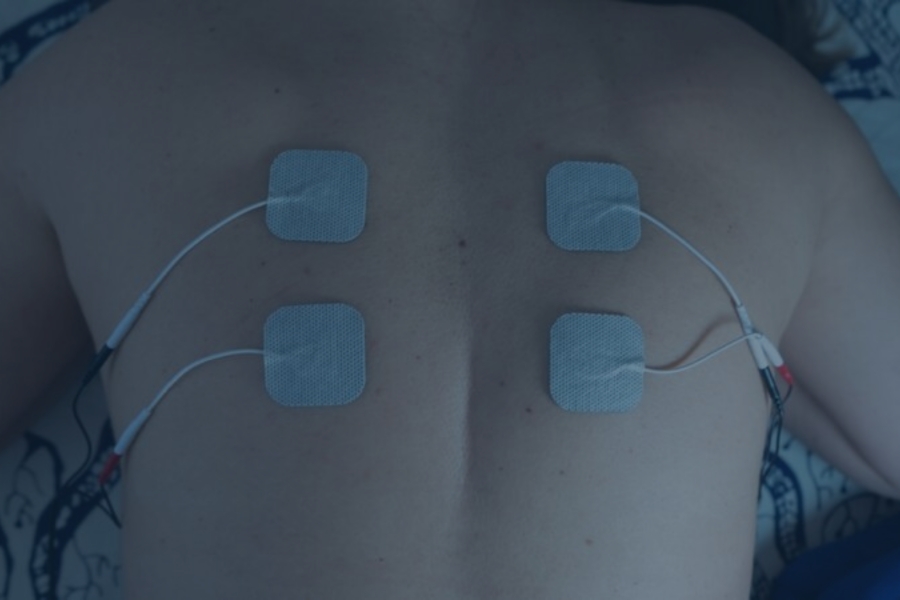
You may be a candidate for a spinal cord stimulator if you have persistent nerve-related pain that has not improved enough with treatments such as physical therapy, medication, injections, or previous surgery.
There is no single qualification that applies to every patient. Spinal cord stimulation is generally considered after more conservative options have been tried and the pain continues to interfere with daily life.
A pain management physician will review your symptoms, diagnosis, medical history, previous treatments, imaging, and overall health. Common candidacy factors include how long the pain has lasted, what type of pain you have, how severely it affects your life, and whether you respond well during a temporary spinal cord stimulator trial.
If chronic nerve pain continues to limit your daily activities, The Center for Regenerative Therapy & Pain Management can determine whether a spinal cord stimulator is appropriate for your condition. Contact our team to learn more about your options for pain treatments in New Jersey and develop a personalized plan based on your needs.
What is a Spinal Cord Stimulator?
A spinal cord stimulator is a small medical device used to manage certain types of chronic pain. It is usually considered for people whose symptoms have continued despite other treatments.
The system includes thin wires placed near the spinal cord and a small pulse generator implanted under the skin. Patients can adjust the therapy using an external controller.
How It Works
A spinal cord stimulator sends mild electrical impulses to targeted areas near the spinal cord. These impulses change or interrupt pain signals before they are fully processed by the brain.
The treatment does not repair every underlying condition, but it may reduce how strongly pain is experienced. This can help some patients move more comfortably, sleep better, and participate more fully in daily activities.
Spinal cord stimulation is also a drug-free treatment option. It may reduce reliance on pain medication for some patients, although results vary and medication changes should always be supervised by a physician.
Before a permanent system is implanted, patients usually complete a temporary trial. This allows the patient and physician to evaluate whether the treatment provides meaningful relief.
Conditions It May Help Treat
Spinal cord stimulation is most often used for chronic nerve-related pain rather than short-term pain from a recent injury.
Conditions that may respond include:
- Chronic back pain
- Persistent pain after back surgery
- Failed back surgery syndrome
- Complex regional pain syndrome
- Peripheral neuropathy
- Chronic leg pain
- Sciatica or radicular pain
- Certain other neuropathic pain conditions
Having one of these conditions does not automatically mean that spinal cord stimulation is appropriate. The source and characteristics of the pain still need to be carefully evaluated.
Signs You May Be a Good Candidate
Spinal cord stimulation is not usually the first treatment recommended for pain. It is generally considered when pain has become chronic, other reasonable treatments have not provided enough relief, and symptoms appear to involve the nervous system.
Your Pain Has Lasted for Several Months
Acute pain begins suddenly and is often connected to an injury, illness, or procedure. It typically improves as the body heals.
Chronic pain lasts longer and may continue for several months or more. It can remain even after an injury has healed or after the original condition has been treated.
Pain duration matters because spinal cord stimulation is designed to manage persistent symptoms. A recent injury that is expected to heal may require time, rehabilitation, medication, or another targeted treatment before spinal cord stimulation is considered.
Conservative Treatments Have Not Provided Enough Relief
Most patients try less invasive treatments before moving forward with spinal cord stimulation.
These may include:
- Physical therapy
- Anti-inflammatory or pain medication
- Epidural or steroid injections
- Nerve blocks
- Activity modification
- Home exercise
- Previous surgery when appropriate
These treatments do not necessarily need to fail completely. A patient may still be considered when earlier treatments provided only temporary relief, caused unacceptable side effects, or did not restore enough function.
The key question is whether reasonable treatment options have been attempted without producing adequate and lasting improvement.
Your Pain Appears to Be Nerve Related
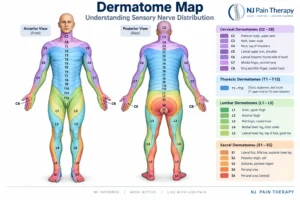
Spinal cord stimulation tends to work best for pain involving damaged, irritated, or abnormally functioning nerves.
Nerve-related pain may feel like:
- Burning
- Shooting
- Tingling
- Electric shocks
- Pins and needles
- Numbness
- Pain traveling into an arm or leg
These symptoms may suggest that pain signals are being generated or transmitted through the nervous system. However, symptoms alone cannot confirm the diagnosis. A physician may use an examination, imaging, diagnostic injections, or nerve testing to better understand the source.
Chronic Pain Is Affecting Daily Life
Pain severity is not measured only by a number on a scale. Physicians also consider how much the condition interferes with everyday activities.
Chronic pain may make it difficult to:
- Work or concentrate
- Sleep through the night
- Stand or walk comfortably
- Exercise
- Drive
- Complete household tasks
- Participate in hobbies
- Spend time with family and friends
When pain consistently limits independence, movement, or quality of life, more advanced treatment options may be appropriate to discuss.
Conditions That May Respond Well to Spinal Cord Stimulation
Spinal cord stimulation may be used for several chronic pain conditions, particularly those involving nerve dysfunction. The diagnosis, pain location, treatment history, and response to the temporary trial all influence whether it is likely to help.
Failed Back Surgery Syndrome
Failed back surgery syndrome describes persistent or recurring pain after spine surgery.
The term does not necessarily mean that the surgery was performed incorrectly. Pain may continue because of scar tissue, nerve damage, recurrent disc problems, spinal changes, or another condition that was not corrected by surgery.
When additional surgery is unlikely to help, spinal cord stimulation may be considered to manage ongoing back or leg pain.
Chronic Radicular Pain (Sciatica)
Radicular pain occurs when a spinal nerve becomes irritated or compressed. In the lower back, this may cause sciatica, with pain traveling through the buttock and into the leg.
Symptoms can include burning, shooting pain, tingling, numbness, or weakness.
Spinal cord stimulation may be considered when radicular pain becomes chronic and treatments such as therapy, medication, injections, or surgery have not provided enough relief.
Complex Regional Pain Syndrome (CRPS)
Complex regional pain syndrome is a chronic pain condition that often develops after an injury, surgery, fracture, or other physical trauma.
The pain may be much more severe or persistent than expected. Patients can also experience swelling, skin sensitivity, temperature changes, color changes, stiffness, or altered sweating.
Because CRPS involves abnormal nervous system activity, spinal cord stimulation may be an option when other treatments do not adequately control the symptoms.
Peripheral Neuropathy
Peripheral neuropathy develops when nerves outside the brain and spinal cord are damaged.
It may cause burning, tingling, numbness, stabbing pain, or unusual sensitivity, commonly in the hands, legs, or feet. Diabetes is a frequent cause, but neuropathy can also result from injuries, infections, medications, autoimmune conditions, or other health problems.
Some patients with painful peripheral neuropathy may benefit from spinal cord stimulation after conservative treatment options have been exhausted.
Other Chronic Neuropathic Pain Conditions
Spinal cord stimulation may also be considered for other persistent neuropathic pain conditions.
Examples may include chronic pain after nerve injury, certain types of postsurgical pain, pain caused by damaged peripheral nerves, and ongoing pain in the arms or legs.
Not every nerve condition responds in the same way. A detailed evaluation is needed to determine whether the pain pattern is appropriate for this treatment.
Who May Not Be an Ideal Candidate
Spinal cord stimulation can be effective for properly selected patients, but it is not the right treatment for every form of pain.
Pain That Is Primarily Mechanical
Mechanical pain comes from muscles, joints, bones, ligaments, tendons, or other physical structures.
It may feel aching, stiff, sore, or tender and often changes with movement, posture, lifting, or weight-bearing.
Spinal cord stimulation is generally more effective for nerve-related pain than for pain caused mainly by arthritis, muscle strain, instability, or another mechanical problem. Treating the underlying structure may be more appropriate.
Pain From an Untreated Structural Problem
Pain may be caused by a condition that needs to be corrected directly.
Examples can include significant spinal instability, severe nerve compression, a fracture, a rapidly worsening neurologic problem, or another condition requiring surgical or medical treatment.
A spinal cord stimulator manages pain signals. It does not repair an unstable spine, remove pressure from a severely compressed nerve, or correct every structural abnormality.
Acute Injuries That May Heal Naturally
Spinal cord stimulation is not generally used for a new strain, sprain, fracture, or other recent injury that is expected to improve with healing.
Acute pain may respond to rest, medication, physical therapy, injections, activity changes, or time.
More advanced treatment is usually considered only if the pain becomes chronic and continues despite appropriate care.
Situations Requiring Other Treatments First
Certain medical or personal factors may need to be addressed before spinal cord stimulation is considered.
These may include:
- An active infection
- An untreated bleeding disorder
- An unresolved surgical condition
- Poorly controlled medical problems
- Difficulty following postoperative instructions
- Unrealistic expectations about the treatment
- Untreated mental health or substance use concerns that could affect recovery
These factors do not always permanently rule out spinal cord stimulation. In some cases, they simply need to be treated, stabilized, or evaluated before moving forward.
How Pain Management Specialists Determine Candidacy
A spinal cord stimulator is not recommended based on one symptom or one imaging result. Candidacy is determined by looking at the full picture: the type of pain, how long it has lasted, what has already been tried, and how much it affects daily life.
Medical History
Your physician will review when the pain started, how it has changed, where it travels, and what it feels like.
They may also ask about:
- Previous injuries or surgeries
- Chronic medical conditions
- Current medications
- Neurologic symptoms
- Sleep and activity limitations
- Mental health history
- Prior pain diagnoses
This helps determine whether the pain pattern is consistent with a condition that may respond to spinal cord stimulation.
Physical Examination
A physical examination helps evaluate strength, sensation, reflexes, movement, balance, and areas of tenderness.
The physician may also look for signs of nerve irritation, weakness, numbness, or pain that travels along a specific nerve pathway.
The goal is not simply to confirm that pain exists. It is to understand which structures or nerves may be contributing to it.
Imaging Review
MRI, CT scans, X-rays, and other imaging may be reviewed to identify structural problems in the spine or surrounding areas.
Imaging can show issues such as:
- Disc herniation
- Spinal stenosis
- Arthritis
- Scar tissue
- Degenerative changes
- Nerve compression
- Prior surgical changes
Imaging does not always explain the full pain experience. Some people have significant findings with little pain, while others have severe symptoms despite less dramatic imaging. That is why scans must be interpreted alongside the examination and symptom history.
Previous Treatments
Your physician will review the treatments you have already tried and how you responded to them.
These may include:
- Physical therapy
- Home exercise
- Medication
- Epidural injections
- Steroid injections
- Nerve blocks
- Radiofrequency ablation
- Surgery
- Activity modification
The goal is to understand what provided relief, how long it lasted, and why symptoms may have continued.
Spinal cord stimulation is usually considered after reasonable conservative treatments have not produced enough improvement.
Identifying the Primary Pain Generator
The pain generator is the nerve, joint, disc, tissue, or other structure believed to be producing the symptoms.
Identifying it can be difficult because chronic pain may involve more than one source. Pain can also spread, become sensitized, or continue after the original injury has healed.
A pain management specialist may use the medical history, examination, imaging, and diagnostic injections to narrow down the likely source.
Spinal cord stimulation is most likely to help when the pain pattern is clearly understood and appears to involve chronic nerve-related signaling.
What Is the Spinal Cord Stimulator Trial?
Before a permanent device is implanted, patients usually complete a temporary spinal cord stimulator trial.
The trial allows you to experience the therapy in real life before making a long-term decision.
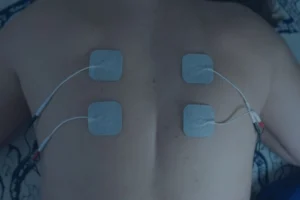
Temporary Trial Leads
During the trial, thin temporary leads are placed near the spinal cord through a minimally invasive procedure.
The leads are connected to an external pulse generator worn outside the body. No permanent battery is implanted during this stage.
The trial usually lasts several days. During that time, you can use the system while completing normal daily activities within the restrictions provided by your physician.
Evaluating Pain Relief
The purpose of the trial is not only to measure whether your pain score decreases.
Your physician may also ask whether you can:
- Sleep more comfortably
- Walk or stand longer
- Complete daily tasks more easily
- Reduce activity-related pain
- Participate more fully in work or family life
- Use less pain medication
Meaningful functional improvement may be just as important as the percentage of pain relief.
You may be asked to keep a short record of your symptoms, activity level, sleep, and medication use throughout the trial.
Deciding Whether Permanent Implantation Makes Sense
After the trial, you and your physician will review the results.
Permanent implantation may make sense if the trial provides meaningful pain relief, improves function, and helps you meet realistic treatment goals.
If the trial does not provide enough improvement, the temporary leads can be removed without moving forward with the permanent system.
This trial-first approach helps reduce uncertainty and allows the decision to be based on your actual response.
Benefits of Spinal Cord Stimulation
The benefits of spinal cord stimulation vary from person to person. It is not a cure for every chronic pain condition, but it may provide meaningful relief for carefully selected patients.
Reduced Pain
Spinal cord stimulation may reduce the intensity or frequency of chronic nerve-related pain.
Some patients experience less burning, shooting, radiating, or electric-like pain. Others may still feel some discomfort but find it more manageable.
The goal is often meaningful improvement rather than complete elimination of pain.
Improved Daily Function
Reduced pain may make it easier to return to activities that have become difficult.
Patients may be able to:
- Walk farther
- Stand longer
- Sleep more comfortably
- Complete household tasks
- Participate in exercise or rehabilitation
- Work with fewer limitations
- Spend more time with family
Improved function is one of the most important ways to measure whether treatment is successful.
Reduced Reliance on Medication
Some patients may be able to reduce their use of pain medication after successful spinal cord stimulation.
This can be especially helpful for people who experience side effects, limited relief, or concerns about long-term medication use.
Medication should never be reduced or stopped without guidance from the prescribing physician.
Adjustable Therapy
Spinal cord stimulators can be programmed and adjusted based on the patient’s symptoms.
Settings may be changed as pain patterns shift or treatment needs evolve.
Patients use an external controller to manage the system within the limits established by the physician and device settings.
Reversible Treatment Option
Spinal cord stimulation is considered reversible because the system can be turned off or removed.
This does not mean removal is always simple or necessary, but it gives patients more flexibility than treatments that permanently alter tissue or spinal anatomy.
The temporary trial also allows patients to test the therapy before committing to implantation.
Frequently Asked Questions About Being a Candidate for Spinal Cord Stimulator
How do I know if my pain is nerve related?
Nerve-related pain often feels burning, shooting, electric, tingling, numb, or radiating.
It may travel along an arm, leg, hand, or foot. Some people also experience unusual sensitivity, pins and needles, or pain from light touch.
A pain management physician can help determine whether the symptoms are coming from a nerve through a physical examination, imaging, diagnostic injections, and other testing when needed.
Do I have to try injections before getting a spinal cord stimulator?
Not every patient must complete the exact same treatments before spinal cord stimulation is considered.
However, most patients are expected to try appropriate conservative options first. These may include physical therapy, medication, injections, activity modification, or surgery depending on the diagnosis.
The treatment history helps show whether less invasive options provided enough relief.
Can I test a spinal cord stimulator before surgery?
Yes. A temporary trial is a standard part of the process.
Temporary leads are placed near the spinal cord and connected to an external device. You use the system for several days to see whether it meaningfully reduces pain and improves daily function.
Permanent implantation is usually considered only after a successful trial.
Does insurance cover spinal cord stimulation?
Many insurance plans may cover spinal cord stimulation when it is medically necessary and required criteria are met.
Coverage may depend on the diagnosis, treatment history, trial results, psychological evaluation, physician documentation, and the specific insurance plan.
The practice and insurance company can help verify coverage and explain prior authorization requirements.
How long does a spinal cord stimulator last?
The implanted leads may remain in place for many years if the system continues to work well and no complications develop.
Battery life depends on the device type, programming, usage, and whether the battery is rechargeable.
Rechargeable systems may last longer, while nonrechargeable batteries may eventually need to be replaced. Your physician can explain the expected lifespan of the recommended system.
Can a spinal cord stimulator be removed?
Yes. A spinal cord stimulator can usually be removed if it is no longer effective, causes complications, becomes infected, or is no longer wanted.
Removal is a surgical procedure and should be discussed carefully with the physician who manages the device.
Conclusion
Spinal cord stimulation may be an option for people with persistent nerve-related pain that has not improved enough with physical therapy, medication, injections, surgery, or other conservative treatments.
Good candidates often have chronic symptoms that interfere with sleep, mobility, work, and everyday activities. They also typically experience meaningful relief during the temporary trial.
Candidates are always individual. The diagnosis, pain pattern, medical history, prior treatments, imaging, overall health, and treatment goals all matter.
If chronic pain continues to limit your life, schedule an evaluation with The Center for Regenerative Therapy & Pain Management. A pain management specialist in NJ can determine whether spinal cord stimulation or another treatment may be appropriate for your condition.