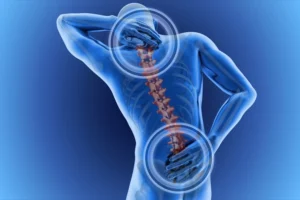

Chronic neck or back pain can come from several different structures in the spine. In some people, the source is the facet joints, which are small joints located along the back of the spine.
A medial branch block is a procedure used to temporarily numb the small medial branch nerves that carry pain signals from those joints.
Medial branch blocks are often used to help determine whether facet joints are contributing to a patient’s pain.
That diagnostic role is important. The goal is not simply to provide short term relief, but to learn whether temporarily blocking those nerves changes the patient’s usual pain. For people exploring pain management treatments in New Jersey, a medial branch block may be one part of evaluating persistent neck or back pain.
Medial Branch Block: Quick Answer
A medial branch block is an injection placed near the medial branch nerves that carry pain signals from the facet joints of the spine.
During the procedure:
- A small amount of anesthetic is placed near selected medial branch nerves
- The medication temporarily interrupts pain signals
- The patient pays attention to whether their usual pain improves
- The response can help determine whether the facet joints are contributing to the pain
A medial branch block is different from a general nerve block because it targets specific nerves associated with the facet joints.
It is also different from an epidural injection. Epidural injections place medication into the epidural space around spinal nerves and are commonly used for certain types of radiating nerve pain. A medial branch block focuses on the nerves that transmit pain from the facet joints.
What Are Medial Branch Nerves?
The facet joints are small joints located along the back of the spine.
These joints help guide spinal movement and provide stability as you bend, twist, and extend your neck or back.
Small nerves called medial branch nerves carry sensory information from these joints. When a facet joint becomes irritated, inflamed, arthritic, or otherwise painful, the medial branch nerves can transmit those pain signals.
The nerves themselves are not necessarily damaged. They are simply carrying information from a painful joint.
This is why temporarily blocking the medial branch nerves can provide useful diagnostic information.
If the patient experiences meaningful improvement after the block, it may suggest that the targeted facet joints are contributing to the pain.
Patients who want to better understand this source of spinal discomfort can also learn more about facet joint pain.
Why Is a Medial Branch Block Performed?
One of the main reasons a medial branch block is performed is to help identify the source of persistent neck or back pain.
Facet joint pain can sometimes look similar to pain coming from discs, muscles, or other spinal structures. Imaging may show arthritis or degeneration, but that does not always prove which structure is actually generating the pain.
A medial branch block gives doctors additional information.
It may be considered when someone has:
- Persistent neck pain
- Persistent lower back pain
- Suspected facet joint pain
- Pain that has not improved enough with conservative treatment
- Pain that worsens with certain spinal movements
- Symptoms that may be appropriate for further treatment such as radiofrequency ablation
The block itself may temporarily reduce pain, but the diagnostic information is often just as important as the temporary relief.
Doctors want to know whether blocking those specific nerves changes the pain pattern in a meaningful way.
What Conditions May Lead to a Medial Branch Block?
Medial branch blocks are generally considered when facet joints are suspected as a source of pain.
Possible situations include:
- Facet joint arthritis
- Facet joint degeneration
- Chronic axial lower back pain
- Chronic neck pain associated with facet joints
- Other suspected facet related spinal pain
Axial pain generally refers to pain centered around the neck or back rather than pain that primarily travels down an arm or leg.
Not every case of chronic back or neck pain is caused by the facet joints.
Disc problems, nerve compression, muscular pain, spinal stenosis, and other conditions may create similar symptoms. That is why medial branch blocks are usually considered only after the patient’s symptoms and examination suggest facet involvement.
What Happens During a Medial Branch Block?
A medial branch block is typically performed as an outpatient procedure.
The exact process can vary, but the basic steps are straightforward.
Before the Procedure
Before the injection, the medical team may review:
- Current medications
- Medical conditions
- Allergies
- Previous procedures
- Imaging results
- The location and pattern of the pain
Patients may also receive specific instructions about medications, eating, drinking, or transportation depending on how the procedure will be performed.
Following those instructions is important because individual medical circumstances can affect preparation.
During the Injection
The patient is positioned so the physician can access the targeted area of the spine.
Imaging guidance, commonly fluoroscopy, may be used to help position the needle near the appropriate medial branch nerves.
Once the correct location has been identified, a small amount of anesthetic is placed near the targeted nerves.
The goal is to temporarily interrupt the pain signals coming from the suspected facet joints.
The procedure itself usually focuses on precision rather than injecting a large amount of medication.
After the Procedure
After the block, patients are often asked to pay close attention to how their normal pain changes.
They may be encouraged to notice:
- Whether the pain decreases
- How much improvement occurs
- How quickly the pain changes
- Which movements feel different
- How long the improvement lasts
This information can help the doctor determine whether the targeted facet joints are likely contributing to the pain.
The comparison between pain before and after the block is one of the most useful parts of the procedure.
How Long Does a Medial Branch Block Last?
The numbing effect of a medial branch block is temporary.
How long it lasts can vary depending on the anesthetic used, the location treated, and the individual patient.
For some people, the effect may last only several hours. Others may notice relief for a somewhat longer period.
The important point is that a medial branch block is not necessarily intended to provide long term pain control.
Its main purpose is often diagnostic.
Even though the numbing effect wears off, the way the patient responded can provide information that helps guide the next treatment decision.
What Does a Positive Medial Branch Block Mean?
A positive response generally means that the patient experienced meaningful temporary improvement after the targeted medial branch nerves were blocked.
That improvement may suggest that the corresponding facet joints are contributing to the pain.
Doctors may consider factors such as:
- How much the pain improved
- How long the relief lasted
- Whether normal movements became easier
- Whether the patient’s typical pain pattern changed
A successful block does not automatically mean that another procedure will be performed.
The physician still considers the overall diagnosis, medical history, response to previous treatment, and other clinical findings.
In some situations, an additional diagnostic block may also be performed before moving forward.
Insurance requirements and clinical protocols can vary, so the exact process is not identical for every patient.
Medial Branch Block and Radiofrequency Ablation
Medial branch blocks and radiofrequency ablation are closely related, but they serve different purposes.
A medial branch block uses medication to temporarily interrupt pain signals from selected medial branch nerves.
Radiofrequency ablation uses controlled energy to reduce the ability of those nerves to transmit pain signals for a longer period.
A successful medial branch block may provide evidence that the targeted nerves are involved in the patient’s pain. That information can help determine whether radiofrequency ablation may be appropriate.
The sequence is logical.
First, doctors try to determine whether the facet joints and medial branch nerves are actually contributing to the pain.
If the diagnostic block supports that conclusion, a longer lasting treatment may then be considered.
Medial Branch Block vs Facet Joint Injection
A medial branch block and a facet joint injection are not the same procedure.
A medial branch block targets the nerves that carry pain signals from the facet joint.
A facet joint injection places medication into or around the facet joint itself.
Both procedures may be used when facet related pain is suspected, but they target different structures.
A medial branch block is commonly used for diagnostic purposes because the response can help determine whether the medial branch nerves and associated facet joints are contributing to the pain.
A facet joint injection may have a different diagnostic or therapeutic goal depending on the patient’s condition.
Which procedure makes sense depends on what the physician is trying to identify or treat.
What Are the Risks and Side Effects?
Medial branch blocks are generally performed using imaging guidance, but all injection procedures have potential risks.
Temporary effects may include:
- Injection site soreness
- Bruising
- Temporary numbness
- Temporary weakness
- Mild discomfort after the procedure
Less common complications may include:
- Bleeding
- Infection
- Allergic reaction
- Nerve injury
Individual risk can vary depending on medications, medical conditions, and other health factors.
Patients should discuss their personal risks and procedure instructions with their physician before treatment.
When to Consider Seeing a Pain Management Doctor
Neck or back pain does not always require a procedure.
However, an evaluation may make sense when symptoms persist, repeatedly return, or begin interfering with normal activities.
Consider seeing a pain management doctor if:
- Neck or back pain lasts several weeks
- Pain continues returning
- Pain worsens with certain spinal movements
- Conservative treatment has not helped enough
- Facet joint pain is suspected
- Pain interferes with sleep
- Work or daily activities become difficult
The goal is to determine which structure is actually producing the pain before deciding what treatment makes sense.
Patients with persistent lower back symptoms can learn more about back pain, while those with ongoing cervical symptoms can review information about neck pain.
Frequently Asked Questions About Medial Branch Blocks
Is a medial branch block the same as a nerve block?
A medial branch block is a specific type of nerve block.
It targets the medial branch nerves that carry pain signals from the facet joints.
Other nerve blocks may target different nerves depending on the condition being evaluated or treated.
Is a medial branch block diagnostic or therapeutic?
It can provide temporary pain relief, but medial branch blocks are commonly used for diagnostic purposes.
The response helps doctors determine whether the facet joints and associated medial branch nerves are likely contributing to the pain.
How painful is a medial branch block?
Patients may feel pressure, a pinch, or brief discomfort during the injection.
The experience varies from person to person and depends on the area being treated.
Patients concerned about discomfort should discuss the procedure with their physician beforehand.
How quickly does a medial branch block work?
Because local anesthetic is used, changes in pain may occur relatively quickly.
Patients are often asked to monitor their usual symptoms during the hours after the procedure so their response can be evaluated.
What happens if a medial branch block works?
If the patient experiences meaningful temporary relief, it may suggest that the targeted facet joints are contributing to the pain.
The physician may then discuss additional diagnostic steps or treatments such as radiofrequency ablation when appropriate.
What happens if a medial branch block does not work?
If the patient’s usual pain does not significantly change, the targeted facet joints may be less likely to be the primary pain source.
The doctor may then consider other possible causes and determine whether additional evaluation is needed.
Can you drive after a medial branch block?
Driving recommendations depend on how the procedure is performed, whether sedation is used, and the physician’s instructions.
Patients should follow the specific transportation and recovery instructions provided by their medical team rather than assuming they can drive immediately afterward.
Understanding Whether Facet Joints Are Causing Your Pain
A medial branch block can help answer an important question: are the facet joints contributing to your chronic neck or back pain?
The temporary relief from the procedure can be useful, but the information gained from that response may be even more important. It can help doctors determine whether the facet joints are truly involved and whether another treatment may make sense.
If persistent neck or back pain is affecting your daily life, the Center for Regenerative Therapy & Pain Management provides pain management in New Jersey based on the source and pattern of each patient’s symptoms.
Schedule a consultation to discuss persistent neck or back pain and whether a medial branch block may be appropriate.