If you’ve ever talked to someone who got an epidural injection while someone else with “the same pain” got a nerve block or a joint injection, you may have wondered how pain doctors make that decision.
The short answer is simple: pain doctors choose injections based on the likely source of your pain, not just where the pain is felt.
Injections are not one-size-fits-all. A patient with back pain, leg pain, hip pain, or neck pain may need a completely different treatment depending on what is actually causing the symptoms. Before recommending an injection, pain specialists consider your symptoms, physical examination findings, medical history, imaging results, previous treatments, and goals for relief.
If you’re exploring pain management in New Jersey, understanding how doctors choose the right injection can help you feel more informed and confident about your treatment plan.
How Do Pain Doctors Decide Which Injection to Use?
Quick Answer
The right injection depends on identifying the structure most likely causing your pain.
Pain doctors often refer to this as finding the “pain generator.” The pain generator is the tissue, joint, disc, nerve, or structure responsible for producing your symptoms.
To narrow it down, your provider may consider:
- Where the pain starts
- Where the pain travels
- What the pain feels like
- What movements make it worse
- Whether numbness, tingling, or weakness are present
- What your imaging shows
- What treatments you’ve already tried
- What activities you’re hoping to get back to
Two people can describe pain in the exact same area and still receive different injections because the underlying cause isn’t always the same.
Why Pain Location Alone Is Not Enough
Pain can be surprisingly misleading.
For example, lower back pain doesn’t automatically mean the problem is coming from the muscles in your back. It could involve a disc, facet joint, sacroiliac joint, irritated nerve, or another structure entirely.
Leg pain isn’t always sciatica. It can also stem from spinal stenosis, hip conditions, peripheral nerves, or even referred pain.
Neck pain may involve spinal joints, discs, nerve irritation, posture-related strain, or pain that originates elsewhere and is felt in the neck.
That’s why pain doctors don’t simply hear, “My back hurts,” and immediately recommend an injection. They look for clues that point toward the most likely source before deciding which treatment makes sense.
What Factors Influence Which Injection Is Recommended?
Your Symptoms
The details matter.
Your doctor will want to know:
- Where the pain is located
- Whether it stays in one area or travels
- Whether it feels sharp, aching, burning, stabbing, throbbing, electrical, or pressure-like
- Whether you experience numbness, tingling, weakness, heaviness, or cramping
- Whether symptoms worsen with sitting, standing, walking, bending, twisting, or lying down
These patterns often provide important clues. Burning, electrical pain may suggest nerve involvement, while aching pain that worsens with certain movements may point toward joints or soft tissues.
Your Medical History
Your history tells part of the story.
Your provider may ask:
- How long you’ve had pain
- Whether symptoms started suddenly or gradually
- Whether there was an injury or accident
- Whether you’ve had surgery
- What treatments you’ve already tried
- Whether you’ve had injections before
- What medications you’ve used
- Whether you’ve participated in physical therapy or chiropractic care
- Whether you have other medical conditions that could affect treatment
Understanding what’s worked—and what hasn’t—helps avoid repeating ineffective treatments and guides future recommendations.
Your Physical Examination
A hands-on exam provides information imaging cannot.
Your provider may evaluate:
- Range of motion
- Strength
- Reflexes
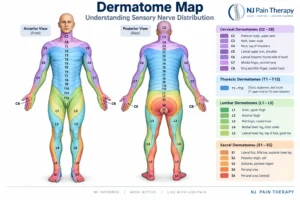
- Sensation
- Areas of tenderness
- Posture
- Walking patterns
- Specific movements that reproduce symptoms
These findings can help confirm whether pain appears nerve-related, joint-related, muscular, or referred from another area.
Imaging and Diagnostic Findings
MRI scans, X-rays, and CT scans can provide valuable information.
They may reveal:
- Disc herniations
- Arthritis
- Spinal stenosis
- Degenerative changes
- Joint abnormalities
- Structural narrowing
However, imaging doesn’t tell the whole story.
Some people have abnormal MRI findings without pain. Others have significant symptoms despite relatively normal imaging.
The best treatment decisions combine imaging with symptoms and examination findings rather than relying on scans alone.
Your Treatment Goals
Pain relief is important, but so is function.
Some patients want to:
- Walk farther
- Sleep through the night
- Return to work
- Exercise comfortably
- Play golf again
- Garden without pain
- Reduce medications
- Delay or avoid surgery
The “right” injection should support the goals that matter most to you.
Which Injection Might Be Recommended for Different Types of Pain?
Epidural Steroid Injections
Epidural steroid injections are commonly used when pain involves irritated or compressed spinal nerves.
They may be considered for:
- Sciatica
- Herniated discs
- Radiculopathy
- Spinal stenosis
- Neck pain radiating into the arm
- Lower back pain traveling into the leg
The goal is to reduce inflammation around affected nerves and improve function.
Facet Joint Injections
Facet joints are small joints located along the spine.
Pain involving these joints may:
- Stay mostly in the neck or back
- Worsen with arching backward
- Increase with twisting movements
- Flare with prolonged standing
Facet injections can reduce inflammation and may also help determine whether these joints are contributing to symptoms.
Medial Branch Blocks
Medial branch blocks target the nerves that carry pain signals from the facet joints.
They’re often used diagnostically.
If relief occurs after the injection, it suggests the facet joints may be responsible for the pain. If relief is significant but temporary, radiofrequency ablation may be considered.
Sacroiliac Joint Injections
The sacroiliac joints connect the spine to the pelvis.
Pain from this area can cause:
- Lower back pain
- Buttock pain
- Hip discomfort
- Upper leg pain
Symptoms may worsen with stairs, standing, getting out of a car, or rolling over in bed.
SI joint injections can help reduce inflammation and confirm whether the joint is contributing to symptoms.
Nerve Blocks
Nerve blocks target specific nerves suspected of causing pain.
They may be used to:
- Diagnose the source of pain
- Provide relief
- Improve participation in therapy
- Restore function
Sometimes they’re both diagnostic and therapeutic.
Steroid Joint Injections
These injections are often used when inflammation or arthritis affects a joint.
Common targets include:
- Knees
- Hips
- Shoulders
- Certain spinal joints
The goal is to calm inflammation and improve movement.
Hyaluronic Acid Gel Injections
These injections are often considered for knee osteoarthritis.
They help improve lubrication within the knee joint and may be recommended when arthritis causes:
- Aching
- Stiffness
- Grinding sensations
- Pain with walking
- Difficulty using stairs
Unlike steroid injections, they focus more on joint cushioning than inflammation reduction.
Regenerative Injections
Regenerative therapies may be considered for selected tendon, ligament, joint, or soft tissue conditions.
Depending on the provider’s approach, options may include PRP and other regenerative treatments.
They’re not appropriate for every condition, but they can be useful for carefully selected patients.
How Doctors Match Symptoms to Injection Type
Pain That Travels Down the Leg
This pattern often raises concern for:
- Sciatica
- Disc-related nerve irritation
- Radiculopathy
- Spinal stenosis
Epidural steroid injections may be considered if nerve inflammation is suspected.
Pain That Stays Mostly in the Low Back
Pain confined to the lower back may involve:
- Facet joints
- Sacroiliac joints
- Muscles
- Discs
The exact location and movements that worsen symptoms help guide recommendations.
Neck Pain That Travels Into the Arm
Radiating neck pain may suggest cervical radiculopathy.
When symptoms follow a nerve distribution, epidural injections may be considered alongside imaging and examination findings.
Joint Pain With Walking or Stairs
Pain worsened by movement or weight-bearing may point toward arthritis or joint irritation.
Steroid injections, hyaluronic acid injections, or regenerative options may be discussed depending on the diagnosis.
Pain That Is Hard to Pinpoint
Sometimes the source isn’t obvious.
In these situations, diagnostic injections can provide valuable clues and help refine the treatment plan.
Are Injections Used to Diagnose Pain, Too?
Diagnostic Injections
Yes.
Diagnostic injections temporarily numb a suspected pain source.
If symptoms improve, it provides evidence that the targeted structure is involved.
These injections are particularly helpful when imaging and symptoms don’t perfectly match.
Therapeutic Injections
Therapeutic injections focus on reducing inflammation and improving function.
Their goal is to help patients:
- Move more comfortably
- Sleep better
- Participate in therapy
- Return to daily activities
When an Injection Does Both
Some injections serve both purposes.
They can confirm the source of pain while also providing meaningful relief.
This is one reason doctors often ask patients to pay close attention to how they feel afterward.
Why Might Someone Else Get a Different Injection?
Two patients can both have “back pain” and need completely different treatments.
One person may have a disc issue.
Another may have facet arthritis.
Someone else may have SI joint dysfunction.
Another may actually have hip-related pain that feels like back pain.
Age, activity level, medical history, surgeries, medications, and personal goals all influence recommendations.
The best injection isn’t the most common one. It’s the one that best matches your situation.
What If the First Injection Doesn’t Work?
Not every injection works for every patient.
That doesn’t mean pain management has failed.
It may mean:
- The diagnosis needs refinement
- Another structure is contributing to symptoms
- The condition is more complex than expected
- Additional testing is needed
- Another treatment may be more appropriate
Pain management is often a process of gathering information, learning from treatment responses, and adjusting the plan when necessary.
Questions to Ask Before Getting a Pain Injection
Why Are You Recommending This Injection?
Ask what structure is being targeted and why.
Understanding the reasoning behind the recommendation can help you feel more comfortable moving forward.
Is This Injection Diagnostic, Therapeutic, or Both?
Knowing the purpose helps set expectations.
Some injections are designed to provide answers, others provide relief, and some accomplish both.
What Results Should I Expect?
Ask:
- When relief may begin
- How long it might last
- Whether soreness is normal
- What improvement would be considered successful
What Should I Track Afterward?
Pay attention to:
- Changes in pain levels
- Walking ability
- Sitting tolerance
- Sleep quality
- Activity levels
- Changes in numbness or tingling
These details help your doctor determine the next step.
What Are the Risks and Alternatives?
It’s reasonable to ask about:
- Potential side effects
- Other treatment options
- Recovery expectations
- What happens if the injection doesn’t help
Frequently Asked Questions About Pain Injections
Can Two People With the Same Diagnosis Get Different Injections?
Yes. Treatment recommendations are individualized and based on the complete clinical picture.
Do MRI Results Determine Which Injection I Get?
No. Imaging is one piece of the puzzle, but symptoms and exam findings matter just as much.
Are Injections Used to Diagnose Pain?
Sometimes. Diagnostic injections can help identify whether a specific structure is responsible for symptoms.
How Does a Doctor Know if an Injection Worked?
Pain relief matters, but improved function matters too. Your provider may ask whether you could walk farther, sleep better, or move more comfortably.
What Happens if an Injection Doesn’t Help?
Your provider may reassess the diagnosis and recommend another injection, additional testing, therapy, medication adjustments, or other treatment options.
The Bottom Line
Pain doctors decide which injection to use by identifying the most likely source of your pain rather than simply treating where it hurts.
Symptoms, physical examination findings, imaging, medical history, treatment responses, and personal goals all help shape the decision.
There isn’t one injection that’s right for everyone. The best treatment is the one that fits your specific condition and helps you get back to the activities that matter most to you.
The Center for Regenerative Therapy & Pain Management offers personalized pain management treatments in New Jersey and can help determine which injection or treatment approach may be right for your unique needs.