
Sciatica is usually associated with pain that starts in the lower back or buttock and travels down the leg. But some people notice something different: part of the foot feels numb, tingly, heavy, or simply different from the other side.
Yes, sciatica can cause foot numbness. The nerves that travel into the foot originate in the lower spine, so irritation or compression of one of those nerve roots can affect sensation farther down the leg.
That said, foot numbness should not automatically be blamed on sciatica. Other nerve and medical conditions can cause similar symptoms, which is why persistent or worsening numbness deserves a closer look.
If numbness, radiating leg pain, or other nerve symptoms continue, pain management in New Jersey can help identify where the symptoms are coming from and what treatment options may be appropriate.
Can Sciatica Cause Foot Numbness?
Quick Answer
Yes. Sciatica can cause numbness in the foot when a nerve root in the lower spine becomes irritated or compressed.
Sciatica affects nerves that travel from the lower spine through the buttock and leg and into different parts of the foot. When those nerves are irritated, symptoms can show up anywhere along that path.
Possible symptoms include:
- Pain
- Numbness
- Tingling
- Burning
- Weakness
Some people experience classic shooting leg pain along with foot numbness. Others may notice that numbness or tingling is more noticeable than the pain itself.
Sciatica is not simply lower back pain. It describes a pattern of symptoms caused by irritation or compression of nerves that travel from the lower spine into the leg.
Why Can Sciatica Make Your Foot Feel Numb?
A nerve does not need to be irritated at the exact location where you feel the symptom.
A spinal nerve can become compressed or inflamed near the lower back, yet the numbness may be felt much farther down the leg or into the foot.
That happens because the same nerves carry sensory information between the foot, leg, spinal cord, and brain.
Nerve Compression Can Change Sensation
Irritated nerves do not always cause pain.
They can also change the way an area feels.
Someone with sciatica may describe:
- Numbness
- Pins and needles
- Burning
- Tingling
- Changes in temperature sensation
- A heavy or “dead” feeling
These sensations are different from ordinary muscle soreness.
Muscle pain may feel achy, tight, or tender. Nerve symptoms are more likely to include burning, electrical sensations, numbness, or tingling that follows a path into the leg or foot.
The Problem May Start in the Back Even If Your Foot Is Numb
If your foot is numb, it is natural to assume the problem is somewhere in the foot itself.
That is not always the case.
The irritated nerve may actually be located much higher in the lower spine.
This is one reason doctors look at the full symptom pattern rather than focusing only on the area that feels numb.
Where Does Sciatica Cause Numbness in the Foot?
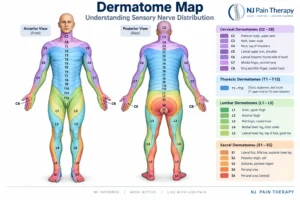
The location of foot numbness can vary depending on which nerve root is irritated.
Nerve patterns can provide useful clues, but they are not always perfectly identical from one person to another. Symptoms can overlap.
Numbness on the Top of the Foot
Some lumbar nerve problems can cause numbness or tingling across the top of the foot and into the toes.
A person may notice that the skin feels less sensitive than the same area on the opposite foot or that the foot frequently feels like it is falling asleep.
Numbness Around the Big Toe
Lumbar nerve irritation can sometimes produce numbness, tingling, or altered sensation around the big toe.
This may occur along with pain or sensory changes farther up the leg.
Numbness Along the Outside of the Foot
Other nerve patterns can affect the outer edge of the foot or the smaller toes.
Again, the exact location varies. Doctors typically consider the entire pattern of pain, numbness, weakness, and reflex changes rather than relying on one numb spot alone.
Can the Whole Foot Go Numb?
Broader foot numbness can occur, but numbness involving most or all of the foot should be evaluated.
Sciatica is one possible explanation, but several different nerve and medical problems can affect sensation throughout the foot.
What Does Sciatica Numbness Feel Like?
Sciatica numbness does not feel exactly the same for everyone.
Some people describe:
- Pins and needles
- Part of the foot feeling asleep
- Reduced sensation when touching the skin
- Burning or buzzing
- Tingling
- A heavy or unusual feeling
- Difficulty feeling the floor normally while walking
The numbness may be constant or come and go.
It can also occur without severe shooting pain.
Someone may have relatively mild back or leg pain while still noticing significant tingling or numbness in part of the foot.
What Conditions Can Cause Sciatica and Foot Numbness?
Sciatica describes the pattern of nerve symptoms. Another condition is usually responsible for irritating or compressing the nerve.
Herniated Disc
A herniated disc can press against or irritate a nerve root in the lower spine.
If that nerve travels into the leg and foot, the result may include radiating pain, numbness, tingling, or weakness.
Patients with persistent leg and foot symptoms may need evaluation for disc herniations or another spinal cause.
Spinal Stenosis
Spinal stenosis occurs when the space around nerves in the spine becomes narrower.
This narrowing can contribute to pain, numbness, tingling, or weakness in the legs and feet, particularly during standing or walking.
Symptoms related to spinal stenosis can sometimes overlap with what people commonly describe as sciatica.
Degenerative Changes in the Spine
Changes involving the spinal discs and joints can also reduce the amount of space available for nearby nerves.
When a nerve becomes irritated or compressed, symptoms may extend into the leg or foot.
These changes do not always cause symptoms, but they can be part of the picture in some people with sciatica.
Is Foot Numbness Always Caused by Sciatica?
No.
Foot numbness can have several causes, so it is important not to assume every numb or tingling foot is coming from the lower back.
Peripheral Neuropathy
Peripheral neuropathy can cause numbness, burning, tingling, or altered sensation in the feet.
Unlike sciatica, which often follows a nerve pathway from the lower spine into one leg, peripheral neuropathy may affect both feet or create a different pattern of symptoms.
A Nerve Problem Outside the Spine
A nerve can also become irritated or compressed farther down the leg.
In those cases, the problem may not involve the spine at all.
The location of the numbness, associated weakness, and physical examination can help narrow down where the nerve may be affected.
Other Medical Causes
Foot numbness can also be associated with certain metabolic, neurological, vascular, or medication related issues.
That is why persistent numbness should be evaluated rather than automatically treated as sciatica.
Can Sciatica Cause Foot Weakness Too?
Yes.
When nerve compression is significant enough, it may affect both sensation and muscle function.
Possible signs of weakness include:
- Difficulty lifting the front of the foot
- Trouble lifting the toes
- Feeling like the foot is dragging
- Difficulty walking on the heels or toes
- The leg or foot giving way
Weakness is more concerning than occasional mild tingling because it can suggest that the nerve is affecting muscle function.
What is Foot Drop?
Foot drop describes difficulty lifting the front part of the foot.
Someone with foot drop may drag the toes, lift the knee higher when walking, or notice that the front of the foot slaps the ground.
New or worsening weakness, including foot drop, should be medically evaluated promptly.
When is Foot Numbness With Sciatica More Concerning?
Mild tingling that comes and goes is different from numbness that is persistent, spreading, or associated with weakness.
Consider speaking with a physician if:
- Numbness does not go away
- The numb area is getting larger
- Pain continues to worsen
- Walking is becoming difficult
- Weakness develops
- Symptoms interfere with sleep or daily activities
- Conservative treatment is not helping
Changes in your symptoms matter.
Even if sciatica has already been diagnosed, new numbness or weakness may be a reason to reassess what is happening.
Symptoms That Need Prompt Medical Attention
Seek prompt medical attention for symptoms such as:
- Significant or rapidly worsening leg weakness
- Foot drop
- Loss of bowel or bladder control
- Numbness around the groin or saddle area
- Severe symptoms affecting both legs
These symptoms can indicate more significant nerve involvement and should not be ignored.
How Do Doctors Determine Whether Foot Numbness Is From Sciatica?
Doctors usually look at the entire symptom pattern rather than one isolated complaint.
Symptom Pattern
You may be asked:
- Where the numbness begins
- Where it travels
- Whether back or leg pain occurs with it
- Which movements or activities make symptoms worse
- Whether weakness is present
The direction and location of symptoms can provide clues about which nerve may be involved.
Physical Examination
A physical exam may include checking:
- Strength
- Sensation
- Reflexes
- Walking
- Leg and spinal movement
These findings can help determine whether the symptoms appear to follow a particular nerve pattern.
Imaging When Appropriate
MRI or other imaging may be considered when symptoms are persistent, severe, changing, or when more information about the spine is needed.
Imaging can help identify problems such as a herniated disc or spinal narrowing, but it is usually interpreted alongside the patient’s symptoms and physical examination.
How is Sciatica With Foot Numbness Treated?
Treatment depends on what is causing the nerve irritation, how severe the symptoms are, and whether weakness or other neurological changes are present.
Conservative Treatment
Many patients begin with conservative care.
Depending on the situation, this may include:
- Activity modification
- Physical therapy
- Appropriate medications
- Gradual return to normal activity
The goal is to reduce irritation while maintaining as much safe movement and function as possible.
Epidural Steroid Injections
Epidural steroid injections may be considered when inflammation around a spinal nerve is contributing to radiating symptoms.
The injection is intended to reduce inflammation around the irritated nerve.
Not everyone with sciatica or foot numbness needs an injection. Whether an epidural injection is appropriate depends on the cause of the symptoms and the patient’s overall treatment plan.
Medication Management
Medication may also play a role depending on the type of pain, severity of symptoms, medical history, and other treatments being used.
A medication management plan should be individualized rather than based only on the presence of numbness.
Does Foot Numbness Go Away When Sciatica Improves?
It can, but improvement is different for every patient.
Pain and numbness do not always disappear at the same time.
Some people notice that shooting leg pain improves first while numbness or tingling takes longer to resolve.
That can happen because irritated nerves may need additional time to recover even after inflammation or pressure begins to improve.
Recovery can depend on:
- How severe the nerve irritation was
- How long the nerve was affected
- What caused the sciatica
- Whether nerve compression is still present
- The person’s overall health
Persistent numbness should still be monitored, especially if it is not improving or if weakness develops.
The Bottom Line
Yes, sciatica can cause foot numbness.
When a nerve root in the lower spine becomes irritated or compressed, symptoms can travel through the leg and into different areas of the foot. Numbness may occur along with pain, tingling, burning, or weakness.
However, not every numb foot is caused by sciatica.
Persistent numbness, worsening symptoms, or new weakness should be evaluated so the actual source of the nerve problem can be identified.
If sciatica, leg pain, or foot numbness continues to interfere with your daily life, exploring pain management services in New Jersey can help identify the source of your symptoms and determine which treatment options may be appropriate.