Ongoing back or neck pain can make simple movements feel harder than they should. Sitting through a workday, standing for long periods, bending, lifting, or even finding a comfortable sleeping position may become frustrating.
One possible cause is degenerative disc disease. This condition involves gradual wear and change in the spinal discs, which sit between the bones of the spine.
Despite the name, degenerative disc disease is not technically a disease. It describes age-related changes that can affect the structure and function of one or more discs. These changes are common, and many people have disc degeneration without experiencing significant pain.
When symptoms do develop, treatment depends on where the affected disc is located, how severe the pain is, and whether nearby nerves are involved.
People living with ongoing back or neck pain can explore personalized pain management treatments in New Jersey at The Center for Regenerative Therapy and Pain Management.
Quick Answer: What Is Degenerative Disc Disease?
Degenerative disc disease is the gradual breakdown of one or more spinal discs.
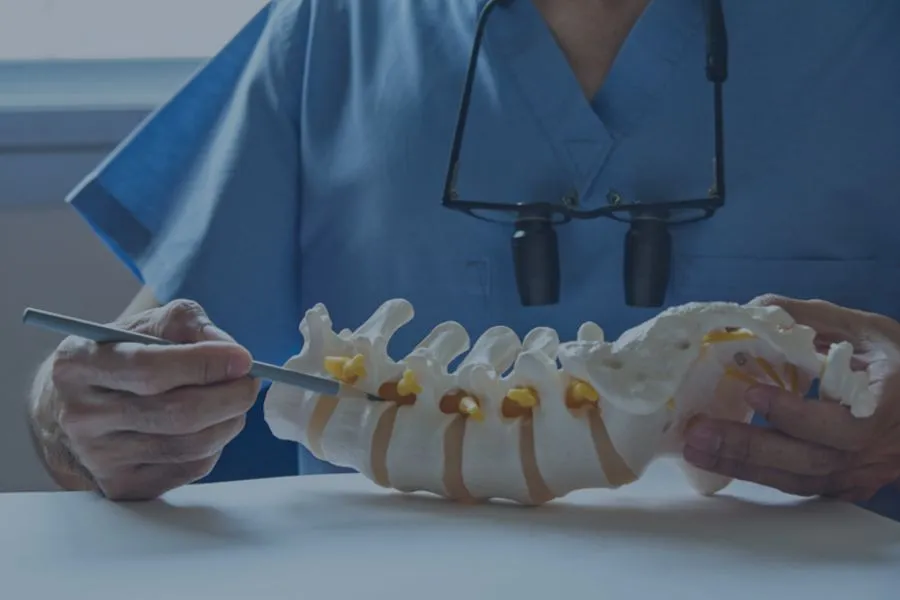
Spinal discs sit between the vertebrae, which are the individual bones that form the spine. Each disc acts as a flexible cushion that helps absorb pressure and allows the spine to move.
Over time, these discs may lose hydration, flexibility, and height. A thinner or less flexible disc may not absorb stress as effectively as it once did.
Disc degeneration becomes more common with age. However, these changes do not automatically cause pain. Some people have visible disc degeneration on an X-ray or MRI and experience few or no symptoms.
What Do Spinal Discs Do?
Spinal discs help the back and neck manage the pressure created by movement, body weight, and daily activity.
Cushion the Vertebrae
The discs absorb pressure when a person walks, bends, twists, lifts, or changes position.
Without this cushioning, more stress would be placed directly on the vertebrae and surrounding joints. Healthy discs also help keep the spinal bones separated and reduce direct contact between them.
Support Spinal Movement
Spinal discs allow the spine to bend, rotate, and move with greater flexibility.
They also help distribute weight and stress across the spine. When a disc loses height or flexibility, nearby joints and tissues may be forced to handle more pressure.
What Causes Degenerative Disc Disease?
Degenerative disc disease usually develops gradually. Aging is the most common factor, but repeated stress, previous injuries, and certain lifestyle factors may contribute.
Natural Aging
Spinal discs naturally change as the body gets older.
These changes may include:
- Loss of water within the discs
- Reduced flexibility
- Gradual loss of disc height
- Small cracks in the outer disc layer
A younger disc typically contains more water and is better able to absorb pressure. As the disc loses moisture, it may become thinner and less resilient.
Repetitive Stress
Repeated pressure on the spine may speed up disc wear.
Activities that may place ongoing stress on the discs include:
- Frequent lifting
- Repeated bending
- Repeated twisting
- Physically demanding work
- Poor lifting mechanics
This does not mean that movement itself is harmful. The risk is more closely related to repeated strain, heavy loads, and insufficient recovery.
Previous Spine Injuries
An injury may weaken or damage a spinal disc.
Possible causes include:
- Falls
- Car accidents
- Sports injuries
- Work-related injuries
A previous injury may affect how the spine moves or distributes pressure, which can contribute to additional wear over time.
Additional Risk Factors
Other factors may increase the likelihood of disc degeneration or related pain.
These may include:
- Genetics
- Smoking
- Obesity
- Limited physical activity
- Weak supporting muscles
- Poor posture or movement habits
Some people are more likely to develop disc changes because of inherited differences in disc structure or durability.
What Does Degenerative Disc Disease Feel Like?
Degenerative disc disease can cause different symptoms depending on where the affected disc is located and whether nearby nerves are irritated.
Some people experience a constant ache. Others have pain that comes and goes in flare-ups.
Back or Neck Pain
Pain may be centered near the affected disc in the lower back or neck.
Common symptoms include:
- Aching
- Stiffness
- Soreness
- Pain that comes and goes
- Pain after certain movements or activities
The discomfort may remain mild or become more noticeable after physical activity, long periods in one position, or repeated strain.
Pain With Certain Positions
Certain positions place more pressure on the spinal discs.
Pain may become worse while:
- Sitting for long periods
- Bending forward
- Lifting
- Twisting
- Standing in one position
- Moving from sitting to standing
Changing positions or walking may sometimes provide relief, although this varies from person to person.
Radiating Nerve Symptoms
Degenerative changes may irritate or compress a nearby spinal nerve.
When this happens, symptoms may travel away from the spine and into an arm or leg.
Possible nerve-related symptoms include:
- Radiating pain
- Numbness
- Tingling
- Burning sensations
- Muscle weakness
Degeneration in the neck may cause symptoms in the shoulder, arm, or hand. Degeneration in the lower back may affect the buttock, hip, leg, or foot.
Where Does Degenerative Disc Disease Occur?
Degenerative disc disease can affect any section of the spine. It is most common in areas that experience frequent movement and pressure.
Lumbar Degenerative Disc Disease
Lumbar degenerative disc disease affects the lower back.
It may cause pain in the center of the lower back or discomfort that reaches the:
- Hips
- Buttocks
- Legs
- Feet
The lower back supports much of the body’s weight, making the lumbar discs especially vulnerable to stress and wear.
Cervical Degenerative Disc Disease
Cervical degenerative disc disease affects the neck.
Symptoms may remain in the neck or travel into the:
- Shoulders
- Arms
- Hands
- Fingers
Some people also experience stiffness, headaches, numbness, tingling, or weakness when nearby nerves are affected.
Thoracic Degenerative Disc Disease
Thoracic degenerative disc disease affects the middle portion of the back.
It is less common than cervical or lumbar degeneration because the thoracic spine moves less and receives support from the rib cage.
When symptoms occur, they may include middle back pain, stiffness, or discomfort that wraps around the ribs or chest.
Degenerative Disc Disease vs. Herniated Disc
Degenerative disc disease and a herniated disc are related, but they are not the same condition.
Degenerative disc disease involves gradual changes such as moisture loss, reduced flexibility, thinning, and weakening of a spinal disc.
A herniated disc occurs when material from the softer center of a disc pushes through or into a weakened area of the outer layer.
Disc degeneration can make the outer layer more vulnerable to tearing or herniation. However, a person may have degenerative disc disease without a herniated disc.
It is also possible to have both conditions at the same time.
How Is Degenerative Disc Disease Diagnosed?
Diagnosis begins by connecting the patient’s symptoms with physical examination findings and, when needed, imaging.
Disc degeneration on an imaging scan does not always explain a person’s pain. For that reason, doctors consider the full clinical picture.
Medical History
A doctor may ask about:
- Where the pain occurs
- How long it has been present
- Whether it is constant or intermittent
- Activities that make it better or worse
- Previous spine injuries
- Numbness or tingling
- Muscle weakness
- Changes in walking or balance
The pattern of pain may help determine whether the symptoms are coming from a disc, joint, muscle, nerve, or another structure.
Physical Examination
The physical examination may evaluate:
- Muscle strength
- Reflexes
- Sensation
- Range of motion
- Posture
- Walking pattern
- Balance
The doctor may also ask the patient to bend, twist, walk, or change positions to see which movements reproduce the symptoms.
Imaging
Imaging may be ordered when symptoms persist, nerve involvement is suspected, or the examination suggests a structural spine problem.
X-rays may show:
- Reduced disc height
- Bone spurs
- Changes in spinal alignment
- Wear in nearby joints
MRI scans provide a closer view of:
- Spinal discs
- Nerve roots
- The spinal cord
- Soft tissues
- Areas of inflammation or compression
Imaging findings must be considered alongside the patient’s symptoms. Many adults have age-related disc changes without pain, so a scan alone cannot always identify the true pain source.
Can Degenerative Disc Disease Be Treated?
Degenerative disc disease can often be managed successfully, even though the age-related changes themselves cannot always be reversed.
Treatment may help:
- Reduce pain
- Improve movement
- Build strength
- Support daily activity
- Reduce flare-ups
- Address nerve irritation
The right treatment plan depends on the location of the affected disc, the symptoms, examination findings, overall health, and activity goals.
Most patients begin with nonsurgical care. Treatment may include physical therapy, activity changes, medication management, or targeted pain procedures when appropriate.
The goal is not simply to treat what appears on an imaging scan. It is to identify the actual source of the symptoms and develop a plan that helps the patient move and function more comfortably.
How Is Degenerative Disc Disease Managed?
Degenerative disc disease is usually managed with a combination of movement, lifestyle changes, medication, and targeted procedures when needed.
The right plan depends on where the pain is coming from, whether a nerve is involved, and how much the symptoms affect daily life.
Physical Therapy and Exercise
Physical therapy can help improve the way the spine is supported and reduce unnecessary stress on painful areas.
A program may focus on:
- Core strength
- Flexibility
- Posture
- Safe movement
- Improved spinal support
Stronger supporting muscles can help the body move more efficiently. Physical therapy may also teach better ways to bend, lift, sit, and change positions.
Exercise should be matched to the person’s symptoms. The goal is not to push through severe pain, but to build strength and mobility safely.
Activity and Lifestyle Changes
Small changes in daily habits may help reduce strain on the spine.
Helpful steps may include:
- Avoiding prolonged sitting
- Changing positions regularly
- Using proper lifting techniques
- Maintaining a healthy weight
- Staying appropriately active
- Avoiding movements that repeatedly trigger pain
Complete rest is rarely the best long-term solution. Too little movement can lead to stiffness and weakness, which may make symptoms harder to manage.
Medication Management
Medication may help control pain, inflammation, or nerve-related symptoms.
The right medication depends on the patient’s medical history, current symptoms, and other treatments. Medication plans should be individualized and medically supervised.
Patients should not change or stop prescribed medication without speaking with the prescribing physician.
Targeted Injections
Targeted injections may be considered when inflammation or nerve irritation contributes to pain.
The type of injection depends on the suspected pain source. A procedure may be directed near an irritated nerve, an inflamed joint, or another structure contributing to the symptoms.
Injections are not used simply because an MRI shows disc degeneration. The procedure should match the patient’s symptoms and examination findings.
Radiofrequency Ablation
Radiofrequency ablation may help when nearby facet joints are contributing to chronic back or neck pain.
The procedure uses controlled heat to interrupt pain signals from selected nerves connected to the affected joints.
Radiofrequency ablation does not repair the spinal disc itself. It is intended to address pain coming from the facet joints rather than reverse disc degeneration.
Spinal Cord Stimulation
Spinal cord stimulation may be considered for select patients with persistent chronic pain.
A small device sends mild electrical signals near the spinal cord to change how pain signals are processed.
This treatment is usually considered after more conservative options have not provided enough relief. Patients typically complete a temporary trial before a permanent device is recommended.
When Surgery May Be Considered
Most people with degenerative disc disease begin with nonsurgical treatment.
Surgery may be considered when there are:
- Progressive neurological symptoms
- Significant spinal instability
- Severe nerve or spinal cord compression
- Disabling pain that does not improve with appropriate nonsurgical care
The decision depends on the cause of the symptoms, imaging findings, overall health, and response to previous treatment.
When Should You See a Pain Management Doctor?
Occasional back or neck soreness may improve with rest and basic care. Persistent or recurring pain may need a closer evaluation.
Consider seeing a pain management doctor when pain:
- Persists for several weeks
- Keeps returning
- Travels into an arm or leg
- Causes numbness or weakness
- Interrupts sleep
- Limits work or daily activities
- Does not improve with conservative care
A pain management doctor can help determine whether the pain is coming from a disc, joint, nerve, muscle, or another structure.
Frequently Asked Questions About Degenerative Disc Disease
Is Degenerative Disc Disease a Normal Part of Aging?
Spinal disc changes become more common with age.
However, not everyone with disc degeneration experiences pain. Some people have visible changes on imaging without noticeable symptoms.
Can Degenerative Disc Disease Heal?
Degenerative changes generally cannot be fully reversed.
However, symptoms may improve with physical therapy, activity changes, medication, targeted procedures, and other appropriate care.
Treatment focuses on reducing pain and improving function rather than restoring the disc to its original condition.
Does Degenerative Disc Disease Always Get Worse?
No. Degenerative disc disease does not always steadily worsen.
Symptoms may remain stable, improve for long periods, or flare periodically. The appearance of the discs on imaging may also change without causing a matching increase in pain.
Can Degenerative Disc Disease Cause Sciatica?
Yes. Degenerative changes may reduce the space around a spinal nerve or contribute to inflammation near the nerve root.
When a nerve connected to the sciatic nerve is irritated or compressed, pain, tingling, numbness, or weakness may travel through the buttock and leg.
Is Walking Good for Degenerative Disc Disease?
Walking may help support mobility, circulation, strength, and general conditioning.
The right amount depends on the person’s symptoms. Some people benefit from shorter, more frequent walks rather than one long session.
Activity should be adjusted if walking significantly increases pain, numbness, or weakness.
Can a Pain Management Doctor Help?
Yes. A pain management doctor can evaluate the source of ongoing back or neck pain and develop an individualized treatment plan.
Care may include:
- Physical therapy recommendations
- Activity guidance
- Medication management
- Targeted injections
- Radiofrequency ablation
- Spinal cord stimulation for select cases
The appropriate treatment depends on the actual source of the pain, not only the imaging results.
Conclusion
Degenerative disc disease involves gradual changes to the spinal discs, including reduced hydration, flexibility, and height.
These changes are common with age and do not automatically mean that someone will experience severe pain or need surgery. Many people manage symptoms with nonsurgical care.
Persistent pain, weakness, numbness, or reduced mobility should still be evaluated. Identifying whether the symptoms are coming from a disc, nerve, joint, or another structure is an important part of choosing the right treatment.
Contact The Center for Regenerative Therapy and Pain Management to discuss personalized pain treatments in New Jersey for ongoing back or neck pain.
SEO Title: Degenerative Disc Disease: Symptoms and Treatment