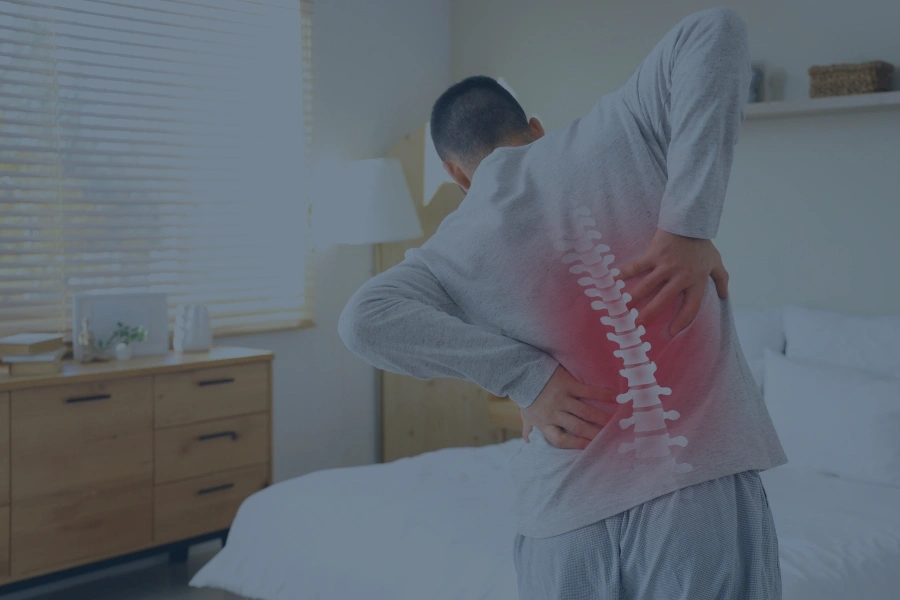
Someone with spinal stenosis may feel relatively comfortable while sitting, only to notice lower back pain, aching legs, heaviness, numbness, or weakness after walking for several minutes. For some people, simply standing in one place can bring on the same symptoms.
This pattern is especially common with lumbar spinal stenosis, which occurs when spaces in the lower spine become narrowed and place pressure on nearby nerves. Walking and standing keep the lower back in a more upright position, which can further reduce the space available around those nerves. Sitting or bending forward often does the opposite, which is why symptoms may improve fairly quickly with rest.
If walking has become increasingly difficult because of back or leg symptoms, learning about available pain management treatments in New Jersey can help you understand what may be causing the problem and which treatment options may be appropriate.
What Happens in the Spine With Spinal Stenosis?
Spinal stenosis means that one or more spaces within the spine have become narrower. Lumbar spinal stenosis affects the lower back, where the spinal canal and surrounding openings provide space for nerves traveling toward the legs.
Several changes can contribute to this narrowing. Arthritis may cause bone spurs to develop. Ligaments can thicken. Spinal discs can change over time and take up additional space. These changes may gradually reduce the room available for nearby nerves.
Symptoms develop when that narrowing begins to affect the nerves. A person may experience pain, numbness, tingling, weakness, cramping, or heaviness in the lower back, buttocks, or legs.
It is also possible to have spinal narrowing visible on an imaging test without experiencing significant symptoms. The presence of stenosis on an MRI does not automatically tell us how much pain or functional limitation a person will have.
Why Does Spinal Stenosis Pain Get Worse When Walking?
The reason often comes down to the position of the lower spine.
When you stand upright or walk, the lumbar spine naturally moves into some extension. This position can make the spinal canal slightly narrower. If the canal is already narrowed by spinal stenosis, the additional reduction in space may increase pressure on irritated nerves.
That helps explain why someone might sit comfortably for an extended period but develop leg pain or heaviness shortly after standing and walking. Mayo Clinic notes that symptoms of lumbar spinal stenosis commonly worsen during prolonged standing or walking and improve when sitting or bending forward.
Walking Keeps the Spine More Upright
Walking requires the body to remain relatively upright. For someone with lumbar spinal stenosis, that position can reduce the room available around already crowded spinal nerves.
The basic pattern is often:
Standing or walking upright: less available space around the nerves and potentially more symptoms.
Sitting or bending forward: more available space and potentially less pressure on the nerves.
This is why posture can have such a noticeable effect on spinal stenosis symptoms.
It also explains why simply sitting down for a few minutes may make someone feel ready to walk again even though the underlying narrowing has not changed.
Symptoms Can Build With Distance
Spinal stenosis pain does not always begin the moment someone takes the first step.
A person may initially walk comfortably and then notice symptoms after several minutes or after reaching a particular distance. The legs may begin to ache, feel heavy, become numb, or feel unusually tired.
For some people, prolonged standing creates the same problem.
Walking posture can also affect symptoms. Cleveland Clinic notes that lumbar stenosis pain commonly worsens with prolonged standing, walking, or walking downhill and may improve when leaning forward, sitting, or walking uphill.
The exact distance someone can walk before symptoms begin varies considerably. One person might struggle after a few minutes while another can walk much farther before discomfort develops.
What Does Spinal Stenosis Feel Like When Walking?
Spinal stenosis does not feel exactly the same for everyone. Symptoms depend on where the narrowing occurs, which nerves are affected, and how severe the compression is.
Common symptoms while walking can include:
- Lower back discomfort
- Aching in the buttocks
- Pain traveling into one or both legs
- Heaviness in the legs
- Tingling
- Numbness
- Weakness
- Cramping
- Legs that feel unusually tired
Some people describe the sensation less as sharp pain and more as their legs becoming heavy or difficult to keep moving.
Symptoms may affect one leg or both legs. They may also come and go depending on posture and activity.
Neurogenic Claudication
The pattern of leg symptoms that worsen with standing or walking and improve with sitting or bending forward is known as neurogenic claudication.
Neurogenic claudication occurs when narrowed spaces in the lumbar spine affect the nerves that travel into the lower body. Symptoms can include pain, heaviness, weakness, numbness, or abnormal sensations in the buttocks, legs, or feet.
A typical pattern might look like this:
A person starts walking and initially feels fine. After several minutes, the legs begin to ache or feel heavy. Continuing to walk makes the symptoms increasingly uncomfortable. The person sits down or leans forward, and the symptoms gradually improve.
That pattern can be an important clue during the evaluation of possible lumbar spinal stenosis.
Why Does Sitting or Leaning Forward Help?
Sitting and leaning forward change the position of the lumbar spine.
When the lower back bends forward, the spaces available around the nerves can increase. This may temporarily reduce pressure on nerves that are being affected by spinal stenosis.
That is why people with lumbar spinal stenosis sometimes notice that they can:
- Walk farther while leaning over a shopping cart
- Feel better when bending slightly forward
- Get relief after sitting down
- Walk more comfortably with a walker that allows a forward leaning posture
Johns Hopkins notes that people with lumbar spinal stenosis may have difficulty walking distances and may need to lean forward to ease pressure on the lower back.
Why a Shopping Cart May Make Walking Easier
Leaning forward over a shopping cart changes the position of the lumbar spine and can temporarily create more room around compressed nerves.
As a result, someone with spinal stenosis may be able to walk through a grocery store while leaning on a cart but struggle to walk the same distance while standing completely upright.
This pattern is sometimes referred to informally as the shopping cart sign.
The cart itself is not treating the spinal stenosis. The relief comes from the change in spinal position.
Spinal Stenosis Walking Pain vs. Sciatica
Spinal stenosis and sciatica can both cause pain that travels from the lower back or buttocks into the leg, but the typical symptom patterns are somewhat different.
Spinal stenosis commonly causes:
- Symptoms that increase with standing or walking
- Aching or heaviness in one or both legs
- Reduced walking tolerance
- Relief with sitting
- Relief when bending forward
Sciatica more commonly describes nerve pain traveling along the pathway of the sciatic nerve. It may feel:
- Sharp
- Burning
- Shooting
- Electric
- Tingling
- Numb
Sciatica symptoms do not necessarily depend on how far someone has walked.
These conditions are not completely separate, however. Lumbar spinal stenosis can narrow the spaces around spinal nerves and produce radicular symptoms that resemble sciatica. The location and behavior of the symptoms are therefore only part of the diagnostic picture.
Does Walking Make Spinal Stenosis Worse?
Pain becoming worse while walking does not necessarily mean that walking is causing additional structural damage to the spine.
With lumbar spinal stenosis, symptoms often change because different positions alter the amount of space available around irritated nerves. Standing and walking may make that space smaller, while sitting or bending forward may provide temporary relief.
This is an important distinction. More pain does not always mean more damage.
At the same time, repeatedly forcing yourself through severe pain, increasing weakness, or significant numbness is not necessarily helpful.
The goal is usually to find an appropriate level of activity that helps preserve strength, mobility, and function without unnecessarily aggravating symptoms.
Should You Keep Walking With Spinal Stenosis?
Many people with spinal stenosis can remain active, but there is no universal walking distance or exercise routine that works for everyone.
Your walking tolerance depends on your symptoms, overall health, the severity and location of the stenosis, and other conditions that may affect mobility.
Someone who develops symptoms after ten minutes of continuous walking may tolerate several shorter walks with breaks much better.
Helpful strategies may include:
- Breaking longer walks into shorter periods
- Taking rest breaks when symptoms increase
- Gradually increasing activity as tolerated
- Adjusting posture when appropriate
- Using a walking aid when recommended
- Working with a physical therapist on strength and mobility
The goal is not simply to walk through as much pain as possible. It is to maintain safe, useful activity while managing symptoms.
Can Physical Therapy Help You Walk Farther?
Physical therapy may help improve the strength, mobility, balance, and movement patterns involved in walking.
Depending on the individual, therapy may focus on:
- Core strength
- Hip and leg strength
- Flexibility
- Spinal mobility
- Posture
- Walking mechanics
- Balance
- Activity tolerance
Exercise does not permanently widen a narrowed spinal canal. Instead, physical therapy may help the body move more efficiently, maintain strength, and improve the person’s ability to perform everyday activities.
Mayo Clinic includes exercise and physical therapy among the nonsurgical management options used for lumbar spinal stenosis.
How Is Spinal Stenosis Pain Treated?
Treatment for spinal stenosis depends on how much the condition is affecting a person’s daily life, neurological function, and ability to remain active.
Someone with mild symptoms may require a very different treatment plan from someone who can no longer walk meaningful distances because of pain or leg weakness.
Conservative Treatment
Treatment often begins with nonsurgical options.
These may include:
- Physical therapy
- Appropriate exercise
- Activity modification
- Medication when medically appropriate
- Adjustments to movements or positions that consistently trigger symptoms
Conservative treatment is intended to control symptoms, maintain function, and help the patient stay active when possible.
Epidural Injections
When irritated or compressed spinal nerves are contributing to pain, epidural injections may be considered for certain patients.
An epidural injection places medication into the epidural space around spinal nerves. The goal is generally to reduce inflammation and irritation affecting those nerves.
Whether an epidural injection is appropriate depends on the person’s symptoms, examination, imaging findings, medical history, and response to previous treatment. It is one possible option rather than a universal treatment for everyone with spinal stenosis.
Other Pain Management Options
Spinal stenosis treatment should be based on more than the appearance of an MRI.
A pain management specialist may consider:
- Where the narrowing occurs
- Which nerves appear to be affected
- How severe the symptoms are
- How far the patient can comfortably walk
- Whether weakness or numbness is present
- Which treatments have already been attempted
- How symptoms affect work and daily activities
Some patients can manage symptoms with conservative care or interventional treatments. Others with significant nerve compression, progressive neurological symptoms, or severe functional limitations may need evaluation by a spine surgeon.
The appropriate next step depends on the individual rather than the diagnosis alone.
When Should Walking Pain Be Evaluated?
Walking related leg pain should be evaluated when it becomes persistent, progressively limits activity, or begins to interfere with everyday life.
Consider seeing a medical professional if you notice:
- Your walking distance is becoming progressively shorter
- Numbness is becoming more frequent
- Your legs feel increasingly weak
- Leg heaviness repeatedly develops while walking
- Standing consistently triggers pain
- Symptoms interfere with work or daily activities
- Conservative care is not providing enough relief
It is also important not to assume that every case of walking related leg pain comes from spinal stenosis. Nerve conditions, joint problems, and circulation problems can produce symptoms that may seem similar.
Certain neurological symptoms require more urgent attention. Loss of bowel or bladder control, severe or increasing numbness around the inner thighs or saddle region, or significant worsening weakness can indicate serious nerve compression and should be evaluated promptly.
Frequently Asked Questions
Why can I walk farther when leaning forward with spinal stenosis?
Leaning forward changes the position of the lumbar spine and can temporarily increase the space available around compressed nerves. This may reduce nerve irritation and allow someone with lumbar spinal stenosis to walk farther before symptoms become limiting.
How far can someone with spinal stenosis walk?
There is no standard walking distance for spinal stenosis. Some people can walk significant distances, while others develop pain, numbness, or leg heaviness after only a few minutes. Walking tolerance depends on factors such as the severity and location of the narrowing, which nerves are affected, physical conditioning, and the person’s overall health.
Does spinal stenosis eventually stop you from walking?
Not necessarily. Spinal stenosis affects people differently, and having the condition does not automatically mean someone will eventually lose the ability to walk. Some people maintain good mobility with conservative treatment, while others develop more significant limitations and require additional treatment.
Is walking or sitting better for spinal stenosis?
Sitting often provides temporary symptom relief because bending the lower spine forward may create additional space around irritated nerves. That does not mean sitting all day is better than staying active. Appropriate movement remains important for maintaining strength and function. The right amount and type of activity should be based on the individual’s symptoms and medical guidance.
Find Treatment for Spinal Stenosis Walking Pain
Spinal stenosis often becomes more noticeable during walking because standing upright can further reduce the space available around already crowded nerves in the lower spine.
For many people, the pattern is recognizable: walking or standing brings symptoms on, while sitting or leaning forward provides relief. That pattern can be an important clue, but it does not prove that spinal stenosis is the cause. Other spine, nerve, joint, and circulation problems can produce similar symptoms.
If back or leg symptoms are making it harder to stand, walk, work, or stay active, explore available pain management treatments in NJ and speak with the Center for Regenerative Therapy & Pain Management about the next step.